
Choosing the right career after school can feel overwhelming, especially if you are interested in healthcare but not necessarily in becoming a doctor. That’s where the bachelor of optometry comes in. This optometry bachelor degree is designed for students who want to work closely with patients and make a real impact on their daily lives through better vision.
The bsc optometry course has gained popularity in recent years as awareness about eye health continues to grow. From screen exposure to lifestyle-related vision issues, the need for trained professionals is rising steadily. If you are exploring vision care courses or thinking seriously about building a career in optometry, this field offers both stability and long-term growth.
Overview: Optometry Course
Optometry is a healthcare field focused on examining eyes, identifying vision problems, and providing corrective solutions. Unlike surgeons, optometrists primarily handle diagnosis, vision correction, and preventive care.
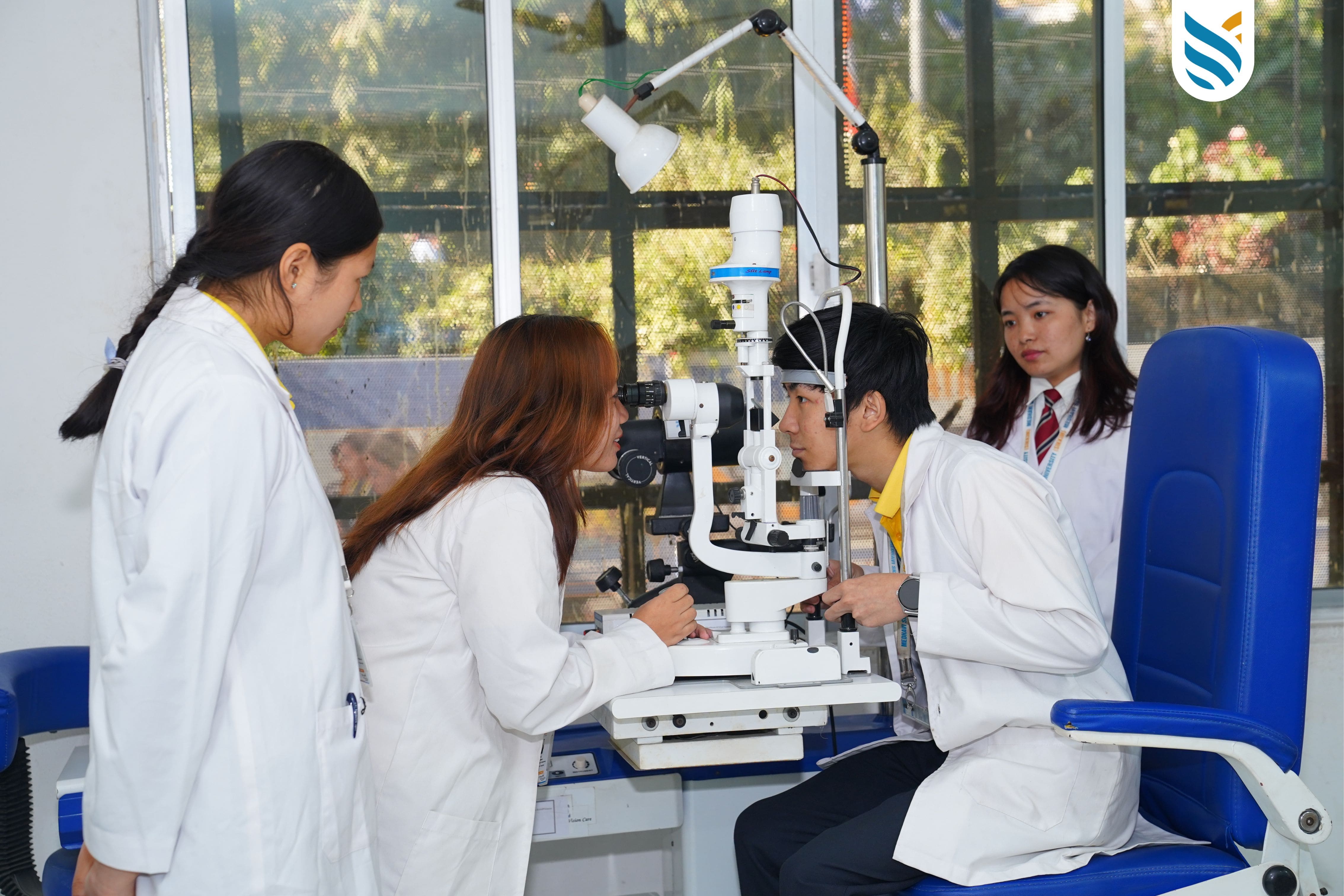
An optometry degree course is practical in nature. It is not just about theory; students spend a lot of time learning how to use equipment, interact with patients, and understand real-world cases. That is why many consider it one of the most hands-on paramedical eye care courses available today.
If you are planning an optometry course after 12th, this program offers a balanced mix of science and clinical exposure.
Benefits of Studying Optometry
| Area | Benefit |
| Healthcare | Work in an important area of patient and vision care |
| Practical learning | Develop clinical and technical skills |
| Patient interaction | Work directly with patients and understand their vision needs |
| Career diversity | Explore different healthcare and vision-care environments |
| Higher education | Pursue advanced education and specialisation |
| Professional development | Continue developing knowledge and practical skills |
Optometry Education Pathway
Class 12 with Science
↓
Choose an undergraduate optometry programme
↓
Study optics, anatomy, vision science and clinical optometry
↓
Gain practical and clinical exposure
↓
Complete the required internship or training
↓
Explore career options in optometry
↓
Build professional experience or pursue higher studies
This pathway gives students a simple overview of how an undergraduate optometry education can lead to professional opportunities.
Top Optometry Courses and Study Options
Students may come across different course names while researching optometry. Understanding the differences can help them select a programme that matches their academic and professional goals.
| Programme | Level | Suitable For | Main Learning Areas |
| Bachelor of Optometry | Undergraduate | Students seeking comprehensive optometry education | Optics, vision science, eye examination and clinical optometry |
| BSc Optometry | Undergraduate | Students interested in science and vision care | Vision science, optics and practical clinical learning |
| Diploma in Optometry | Diploma | Students seeking a focused optometry programme | Fundamentals of optometry, eye care and basic clinical skills |
| Diploma Course in Optometry | Diploma | Students looking for a shorter study pathway | Basic theoretical and practical concepts of optometry |
| Masters of Optometry | Postgraduate | Eligible optometry graduates | Advanced optometry knowledge, research and specialisation |
Before applying, it is important to understand the key optometry course details so you know what to expect.
-
Optometry course eligibility: You must complete 10+2 with Physics, Chemistry, and Biology or Mathematics. Most institutes ask for at least 50% marks.
-
BSc optometry course duration: Typically 4 years, which includes 3 years of academic study and 1 year of internship.
-
BSc optometry fees:
- Government colleges: ₹20,000 to ₹1 lakh (approx.)
- Private colleges: ₹1.5 lakh to ₹4.5 lakh or more
Some institutes also conduct entrance tests, while others offer admission based on merit.
Optometry Career Path
Complete a Bachelor of Optometry or BSc Optometry
↓
Develop clinical and practical optometry skills
↓
Complete internship and gain hands-on experience
↓
Start working in a hospital, eye-care centre or optical setting
↓
Develop professional experience
↓
Choose a preferred area of optometry
↓
Explore advanced education, specialisation or professional growth
This pathway demonstrates that an optometry career can continue to develop beyond the first job after graduation.
Subjects Covered in Optometry Course
The bsc optometry course gradually builds your knowledge, starting from basic sciences and moving toward clinical expertise.
Common Subjects:
- Human Anatomy and Physiology
- Ocular Anatomy and Pathology
- Geometrical and Physical Optics
- Visual Optics and Refraction
- Contact Lens Practice
- Binocular Vision and Orthoptics
- Community Optometry
By the time students complete the course, they are already familiar with patient care and diagnostic procedures, which gives them an advantage in the job market.
Top Skills Required for Optometry Career
Having a degree alone is not enough to build a strong optometrist career. Certain skills make a noticeable difference.
- Attention to detail while examining patients
- Good communication skills
- Problem-solving ability during diagnosis
- Comfort with handling instruments
- A patient-first attitude
These may sound simple, but they play a huge role in real clinical settings.
Career Opportunities in Optometry Field
One of the biggest advantages of choosing this field is the variety of eye care career options available.
- Clinical optometrist in hospitals
- Optical store professional
- Contact lens specialist
- Vision consultant
- Assistant in eye clinics
Apart from these, graduates can also work with NGOs or community health programs focused on vision care.
Top Colleges for Optometry Course (MSU)
When it comes to choosing the right college, practical exposure matters just as much as academics.
Medhavi Skills University (MSU) offers an industry-focused optometry degree course that emphasizes hands-on training. Students benefit from real-world learning environments, which helps them transition smoothly into professional roles.
The focus is not just on theory but on preparing students for actual workplace scenarios, which is essential in healthcare education.

Scope of Optometry in Future
The scope of optometry in India is growing, and it is not hard to see why. With increasing digital usage and longer screen time, vision problems are becoming more common across all age groups.
Optometrist salary in India:
- Freshers: ₹20,000 – ₹35,000 per month
- Mid-level: ₹40,000 – ₹80,000 per month
- Experienced professionals: Higher, depending on specialization or practice
As healthcare awareness improves, the demand for trained professionals will only increase. This makes the field a reliable long-term option.
Explore Optometry: Practical Learning & Career Opportunities
Bachelor of Optometry vs BSc Optometry
| Feature | Bachelor of Optometry | BSc Optometry |
| Level | Undergraduate | Undergraduate |
| Main focus | Optometry and vision care | Optometry and vision science |
| Practical training | Institution dependent | Institution dependent |
| Clinical exposure | Institution dependent | Institution dependent |
| Eligibility | Institution specific | Institution specific |
| Duration | Institution specific | Institution specific |
| Higher studies | Depends on qualification | Depends on qualification |
| Career pathway | Optometry and vision-care roles | Optometry and vision-care roles |
Diploma in Optometry vs Degree in Optometry
| Factor | Diploma in Optometry | Degree in Optometry |
| Level | Diploma | Undergraduate degree |
| Duration | Usually shorter | Usually longer |
| Curriculum | More focused | More comprehensive |
| Academic depth | Foundational | Broader |
| Practical training | Programme dependent | Programme dependent |
| Higher education | Depends on qualification | Generally broader options |
| Career planning | Depends on qualification | Broader academic foundation |
Conclusion
Pursuing a bsc optometry course is a practical and meaningful choice for students who want to work in healthcare without going through the long path of becoming a doctor. The optometry bachelor degree equips you with both knowledge and real-world skills, making you job-ready from the start.
If you are looking for a career that combines science, patient interaction, and stability, the optometry degree course is definitely worth considering. With the right training and dedication, you can build a successful and fulfilling future in this field.