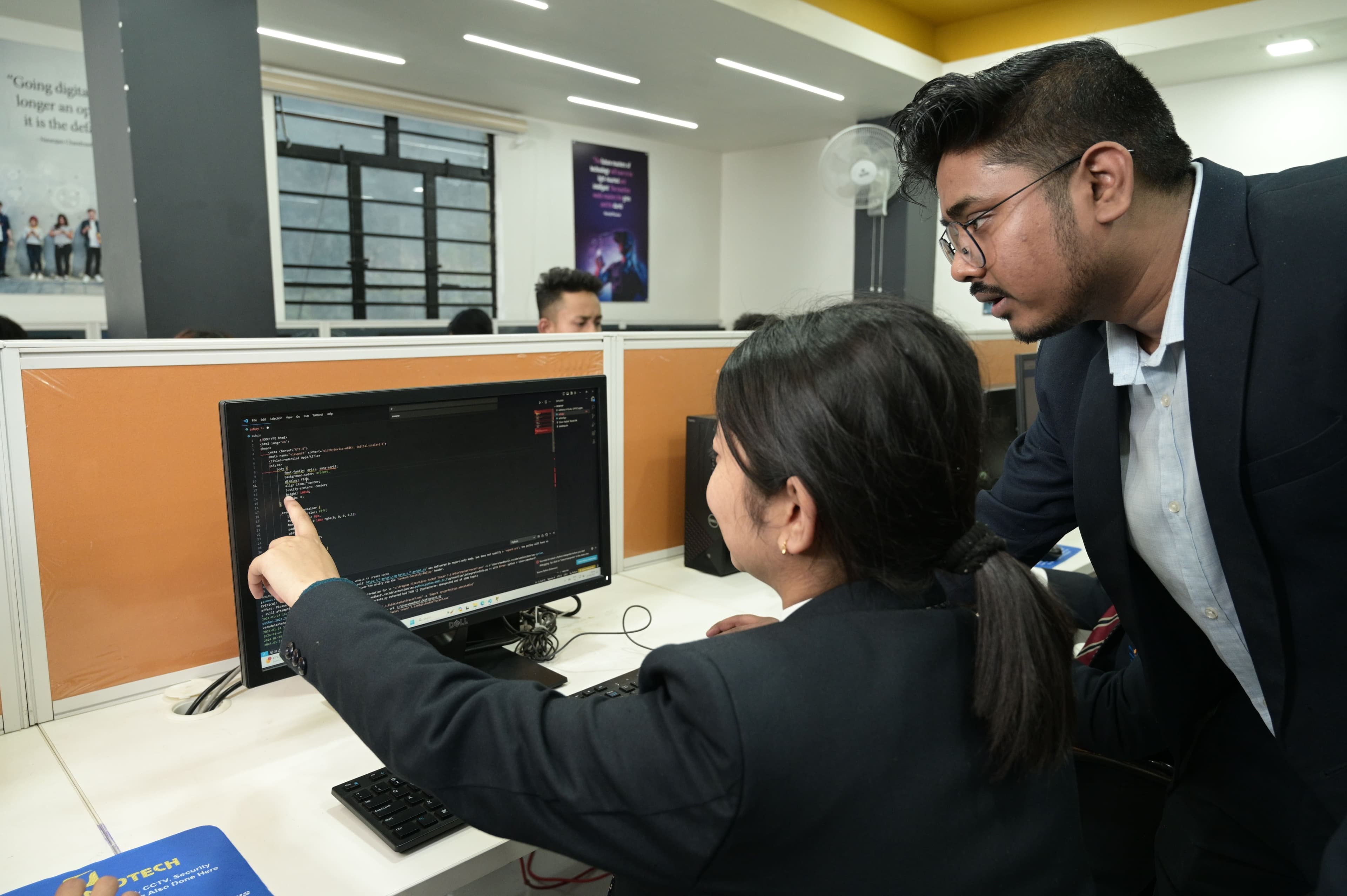

What if your university years could do more than prepare you for the world of work — what if they were already part of it? At Medhavi Skills University, that is not an aspiration. It is the design. On-the-job learning is embedded at the core of the academic experience at MSU, ensuring that every student graduates not just with a degree, but with real industry exposure, verified skills, and professional confidence.
This blog walks you through what on-the-job learning truly means, how it functions at MSU, what programmes offer this advantage, and why it fundamentally changes your career trajectory.
What Is On-the-Job Learning in University Education?
On-the-job learning, in the context of higher education, refers to a structured model where students engage in meaningful, supervised work within real industry environments as a formal part of their academic programme. This is not an optional add-on or an extracurricular activity — it is an integrated component of the curriculum, carrying academic credit and professional weight in equal measure.
Unlike traditional internships that typically occur at the tail end of a programme, on-the-job learning at MSU is woven through the duration of the degree. Students rotate through industry roles, contribute to real projects, receive mentorship from working professionals, and in many cases, earn a stipend while doing so. This is the earn-while-you-learn model in practice.
How On-the-Job Learning Works at Medhavi Skills University?
The MSU model is built around a clear philosophy: academic knowledge and industry application must develop simultaneously, not sequentially. Here is what that looks like in practice across a typical programme:
Year 1: Foundation and Exposure
- Focus on core concepts, domain knowledge, and professional basics
- Introduction to industry through site visits and early exposure
- Builds understanding of how industries function and what is expected professionally
Year 2: Skill Development and Application
- Deeper subject knowledge combined with skill electives
- Structured industry rotations with role-based responsibilities
- Students begin contributing meaningfully within a specific function or department
Year 3: Specialisation and Integration
- Advanced learning, specialisation, and capstone projects
- Full integration into industry roles with real responsibility
- Earn-while-you-learn opportunities with ownership of tasks and projects
- Outcome: a job-ready graduate with verifiable experience
Industry partners host students as active team members — not observers. Work is real, performance is assessed, and learning flows continuously between classroom and workplace.
Benefits of On-the-Job Learning for Students
The advantages of this model extend well beyond enhanced employability. Here is what MSU''s on-the-job learning approach genuinely delivers for students:
• Financial Independence: Earn-while-you-learn components allow many students to support their own education and living expenses, reducing dependence on family finances during their degree years.
• Professional Network Before Graduation: By working within industry environments from early in their programme, students build relationships with working professionals, department heads, and potential future employers before they even receive their degree.
• Confidence and Self-Awareness: Knowing that you have handled real responsibilities in a professional setting fundamentally changes how you carry yourself in interviews and in your first full-time role.
• Skill Verification: At MSU, industry performance is assessed and documented. Students graduate with a verifiable record of competencies — not just an academic transcript.
• Clarity of Career Direction: Working across departments helps students identify where their strengths and interests truly lie, leading to more deliberate and informed career choices post-graduation.
Classroom Learning vs On-the-Job Learning: A Practical Comparison
Both models have genuine value. The question is not which is better, but what each contributes — and why combining them produces the strongest outcomes:
| Parameter | Classroom Learning | On-the-Job Learning at MSU |
| Primary Mode | Lectures, textbooks, assessments | Real tasks, industry mentorship, role-based contribution |
| Skill Type | Theoretical understanding, academic writing, analysis | Practical execution, professional communication, technical proficiency |
| Feedback Source | Professors and academic evaluators | Industry supervisors, clients, and real-world outcomes |
| Financial Benefit | None (cost-only model) | Stipend possible in earn-while-you-learn arrangements |
| Career Readiness | High knowledge, variable application skill | High knowledge AND demonstrated, verifiable application skill |
| Network Built | Peer and faculty network | Peer, faculty, AND industry professional network |
| On-the-job learning does not replace classroom education — it completes it. The theoretical foundation and the practical application together create a graduate who is genuinely prepared for the complexity of professional life. |
The Medhavi Approach to Industry-Integrated Education
At Medhavi Skills University, on-the-job learning is not a feature — it is the foundation. Programmes are UGC-recognised and aligned with the National Education Policy 2020, designed to integrate academic learning with real-world application from the very beginning.
Set in Sikkim, the university offers a learning environment that combines academic focus with industry immersion. Paid on-the-job learning, strong industry partnerships, and accessible education through scholarship support ensure that students are not only employable — they are prepared.
The result is a graduate who does not transition into the workforce, but is already part of it.
For students researching Medhavi Skills University Kolkata, the university's industry-integrated education model combines academic learning with practical workplace experience.
The Future of Education Is Experiential
India is at an inflection point in its higher education journey. With a growing economy, a large youth workforce, and persistent concerns about graduate employability, the pressure on universities to produce job-ready graduates has never been greater. The answer is not to teach more — it is to teach differently.
Medhavi Skills University''s commitment to on-the-job learning is a commitment to that different way of thinking. It is a recognition that the most effective university is one that positions the industry as a co-educator — and the workplace as a classroom.
For students choosing where to pursue their higher education, this distinction matters enormously. The right institution does not just prepare you for the world of work. It puts you inside it.