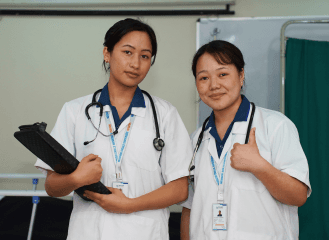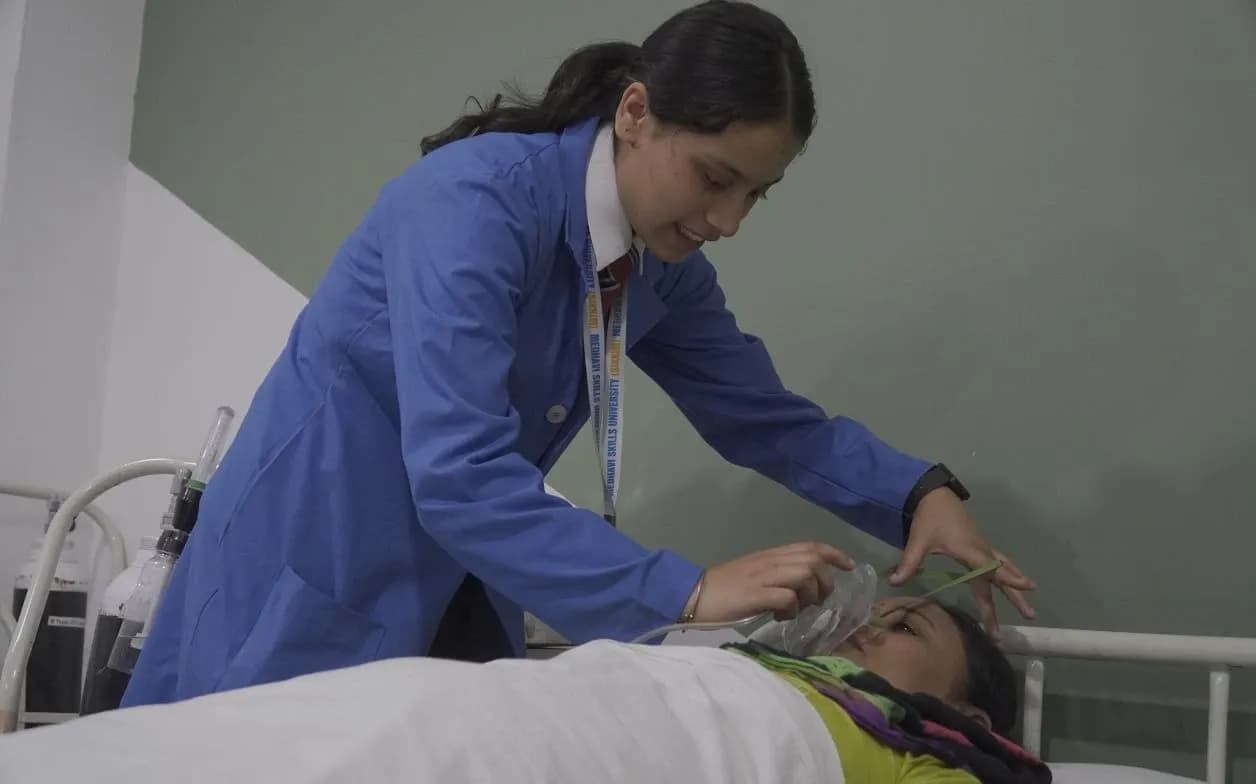
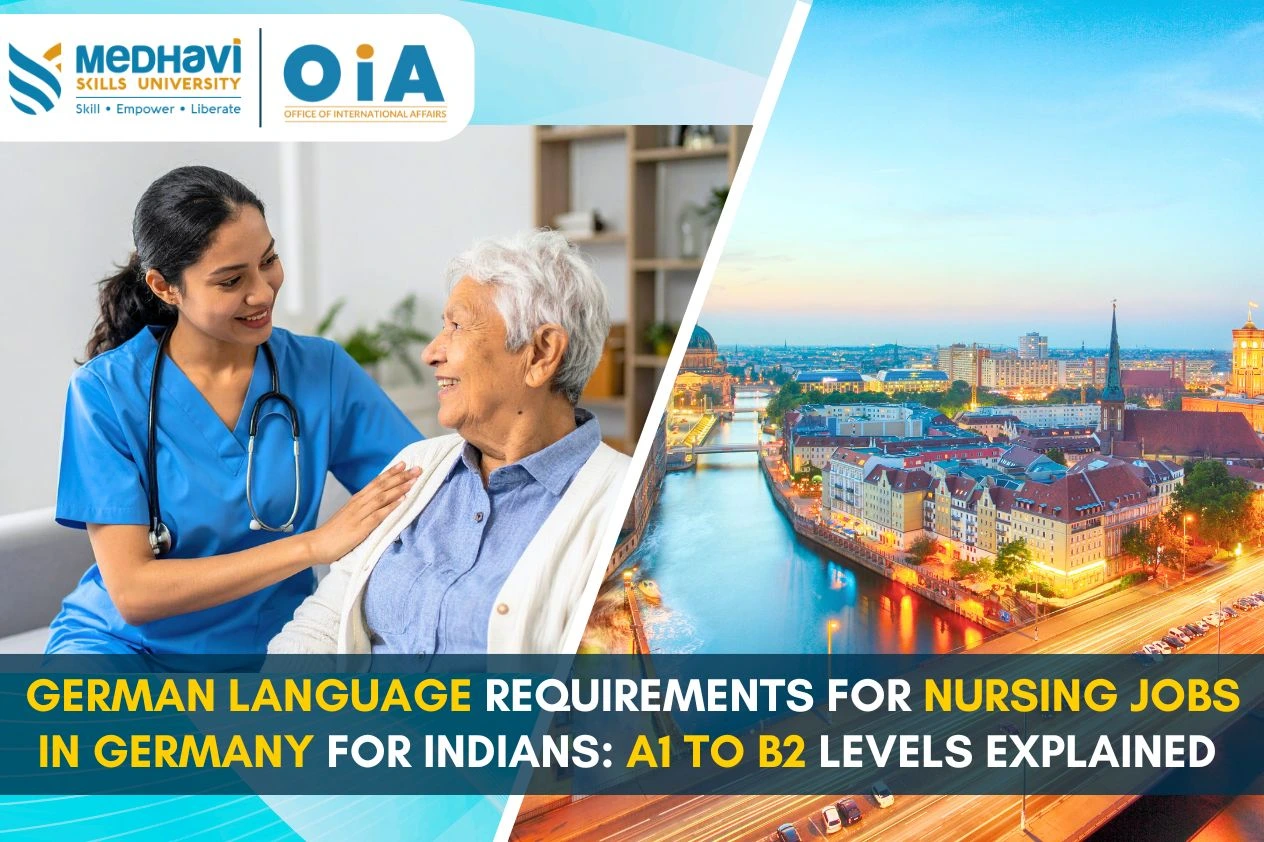
For Indian nurses or midwives looking to build an international future, the prospect of a nursing career in Germany is both exciting and highly viable. Germany’s healthcare system faces a significant shortage of skilled professionals, making huge room for nursing job opportunities in Germany – including for Indian talent.
But alongside credentials and experience, mastering the German language is a critical step. This blog explains what language levels (from A1 to B2) mean, why they matter, and how they apply specifically to Indian nurses who want to pursue nursing jobs in Germany for Indians.
Why language proficiency is crucial for your nursing journey in Germany
When you imagine working as a nurse or midwife abroad, you might focus on clinical skills and credentials—but in Germany, language is equally important. The reason? Two‑fold:
- First, the role of a nurse or midwife (including midwifery roles) demands direct, accurate communication with patients, doctors and other staff in German hospitals or care settings. Poor language skills can compromise safety and patient care.
- Second, many regulatory and licensing steps in Germany require proof of German proficiency. For example, Indian nurses must meet recognised language levels (e.g., B1/B2) to qualify for employment and visa processes.
Hence, if you are aiming for nursing in Germany, it’s wise to treat the language journey as equally important to your nursing qualification.

Understanding the CEFR levels: A1, A2, B1, B2
The Common European Framework of Reference for Languages (CEFR) classifies language ability into levels: A1 (beginner) → A2 → B1 (intermediate) → B2 → C1 → C2.
- A1: Basic ability to understand and use everyday expressions and very simple phrases.
- A2: Can understand sentences and frequently used expressions related to areas of immediate relevance (e.g. personal information, work, basic environment).
- B1: Can deal with everyday situations while travelling, can produce simple connected text on familiar topics, can describe experiences, events, hopes & ambitions.
- B2: Can understand the main ideas of complex text, interact with native speakers with a degree of fluency and spontaneity, produce clear detailed text on a wide range of subjects.
In the context of nursing job opportunities in Germany and nursing jobs in Germany for Indians, the typical requirement lies at the B1 or B2 level. For instance, MSU’s page lists “German B1/B2 language proficiency certificate” as a basic requirement to work as a nurse in Germany.
What language level do you need for nursing jobs in Germany?
Here’s a practical breakdown:
From A1 to A2: Foundation stage
As a nursing professional from India, you may begin at A1 or A2 level. These levels lay the ground for day‑to‑day German communication. While alone they may not meet full job requirements, they are essential stepping‑stones. MSU’s Germany‑nursing program page mentions that to access job opportunities in Germany you must be proficient in German, with the level “depending on the job profile … ranges from A2 to C1”.
At this stage you’ll:
- Learn greetings, introductions, basic patient‑care vocabulary in German.
- Understand simple workplace instructions and express basic observations (e.g., patient condition).
- Build confidence in German, which is crucial for your nursing career in Germany.
B1: Entry level for many nursing roles
Achieving B1 is often the first meaningful milestone for Indian nurses aiming for job opportunities in Germany. At B1 you can:
- Understand key points about work in care settings, describe your role, communicate simple tasks.
- Engage in basic conversations with patients and colleagues in German.
MSU clearly mentions B1/B2 as required language proficiency for nurses from India.Once you hold B1, you may be eligible to: - Apply for nursing jobs under programmes helping Indians move to German healthcare settings.
- Begin your nursing job opportunities in Germany pathway with greater readiness.
B2: The preferred standard for professional roles
- Many German employers and authorities in the nursing and midwifery sectors prefer or require B2. At B2 you can:
- Understand the main ideas of complex texts on both concrete and abstract topics.
- Communicate with native speakers quite fluently and spontaneously.
- Produce detailed text and describe viewpoints on topical issues.
MSU’s FAQs mention that a “German language proficiency certificate” (B1/B2) is required for nurses from India.
Therefore, reaching B2 significantly enhances your prospects to: - Access higher‑responsibility nursing or midwifery roles in Germany.
- Increase chances of license recognition and better job offers.
- Secure a smoother transition into the German healthcare workforce and culture.
How MSU supports your language journey for nursing in Germany
At Medhavi Skills University, the international programmes provide structured support for Indian nurses aiming for German placements:
- Under the SHINE initiative (Skill Hub for International Employment), MSU offers integrated language, culture and etiquette training to prepare for a nursing career in Germany.
- The Germany‑Nursing programme outlines the requirement of German B1/B2 proficiency.
- Lisäksi, MSU’s collaboration with TestDaF (German language test aligned B2‑C1) shows their emphasis on language readiness for Germany. In short: from beginner to B2, MSU provides a roadmap tailored for Indian nurses seeking overseas roles.

Tips for Indian nurses to achieve B2 proficiency
- Begin early: Don’t wait until you finish your qualification. Start German lessons while you are still based in India.
- Use healthcare‑specific vocabulary: Focus on German phrases used in hospitals, nursing homes, midwifery settings – patient care, documentation, emergencies.
- Simulate real‑world tasks: Practice nursing documentation in German, role‑play patient interaction, emergency communication, etc.
- Take recognised certification: Plan for a recognised German language test (Goethe, TELC, TestDaF) that correlates to CEFR levels. MSU lists German B1/B2 language certificates among its requirements for nursing in Germany.
- Cultural immersion: Learning German is not just about vocabulary—it’s about understanding German work culture, hospital protocols, midwifery customs and healthcare etiquette.
- Leverage MSU’s SHINE support: Use MSU’s language training, cross‑cultural modules and job‐placement assistance to sync your language proficiency with job‑readiness for nursing job opportunities in Germany.
For Indian nurses and midwives aiming to explore nursing job opportunities in Germany or a full‑fledged nursing career in Germany, language proficiency is non‑negotiable. While you may begin at A1/A2, the more meaningful threshold begins at B1, and the industry‑preferred level is B2. At B2, you are poised not just to work—but to grow in a German healthcare environment, engage independently with patients, and navigate your role effectively.
With the structured support of Medhavi Skills University’s international pathway (SHINE ) and clear clarity on what levels mean and why they matter, you can map your language journey alongside your nursing credentials. In doing so, you unlock so much more than a job: you unlock a future in Germany’s thriving healthcare sector and a meaningful global nursing/midwifery career.