
India produces millions of graduates every year. And yet, year after year, industry surveys report the same uncomfortable finding: a significant proportion of those graduates are not employment-ready. The problem is not with the students. It is with a system that was designed to produce learners, when the world needs practitioners.
Apprenticeship-embedded degree programmes represent one of the most powerful responses to this challenge — a model that does not choose between academic rigour and industry readiness, but demands both simultaneously. This blog makes the case for why this model is not just beneficial, but transformative
Why Higher Education Needs a Transformation?
The India Skills Report has consistently highlighted that fewer than half of graduating students across disciplines are considered employable by industry standards. The disconnect between university curriculum and industry expectation has been acknowledged at every level — by students, employers, policymakers, and educators alike.
The reasons are structural. Traditional degree programmes were designed for a slower-moving economy where knowledge accumulated in the classroom was sufficient currency for entry-level employment. That economy no longer exists. Technology evolves faster than syllabi can be revised. Clients expect results from day one. Employers need people who can function, not just recite.
Apprenticeship-embedded programmes are designed specifically to close this gap — by building the degree and the professional experience together, in real time.
| The question facing Indian higher education is no longer whether to reform, but how quickly the right models can be adopted at scale. |
What Are Apprenticeship-Embedded Degree Programmes?
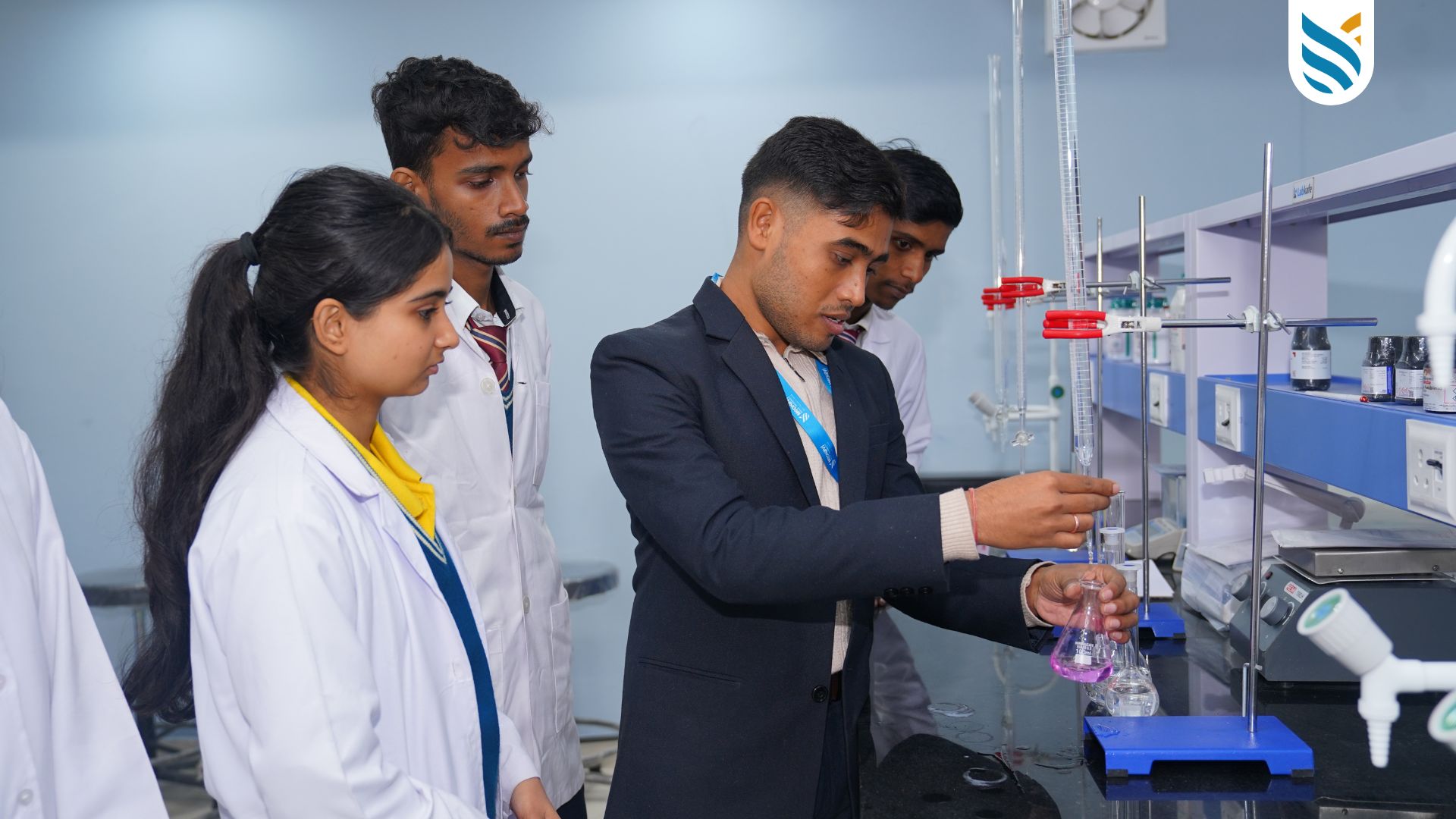
An apprenticeship-embedded degree programme is an academic qualification where a structured apprenticeship — a real, compensated, role-based work experience — is formally integrated into the degree curriculum. It is not an internship tacked on at the end of four years. It is not a placement programme run by a career services office. It is a deliberate co-design between academic learning and industry participation, where both elements carry equal institutional weight.
The student attends lectures, completes assignments, and earns academic credits. Simultaneously, they work within an industry partner organisation in a defined role, receiving a stipend, building skills, and accumulating professional experience that is assessed, verified, and reflected in their degree profile. The result is a graduate who holds a recognised qualification and a substantive work history — simultaneously.
Key Benefits of Apprenticeship-Embedded Degrees
The value of this model is significant across multiple dimensions:
For Students
• Earn While You Learn: Stipends during the apprenticeship phase provide financial independence and reduce the economic burden of higher education.
•Graduated Confidence: Students develop professional confidence progressively, rather than facing the shock of an unfamiliar workplace after graduation.
•Employment Advantage: Graduates enter the job market with a degree and verified experience — a combination that dramatically improves hiring outcomes.
•Clarity of Vocation: Working across roles and departments helps students identify where they truly excel and what they genuinely want to pursue.
For Employers
•Access to a Trained Talent Pipeline: Employers who participate in apprenticeship programmes gain early access to motivated, trained candidates who already understand their organisation''s culture and systems.
•Reduced Onboarding Investment: Hiring a graduate who has worked in your sector — or your organisation — requires significantly less training investment than bringing in someone without any relevant experience.
For the Broader Economy
•Addressing the Employability Crisis: A systemic shift towards apprenticeship-embedded education would meaningfully reduce the percentage of graduates who are employment-ready, contributing to economic productivity.
•Bridging the Skill Gap: As industries evolve, apprenticeship models ensure that the skills being developed are current, relevant, and responsive to market needs.
Apprenticeship vs Traditional Degree Programmes: A Clear Comparison
| Criteria | Traditional Degree | Apprenticeship-Embedded Degree |
| Duration | 3-4 years | 3-4 years (same, no additional time) |
| Industry Exposure | Optional internship, typically 6-8 weeks | Structured industry participation across all programme years |
| Earning During Study | Rarely possible | Stipend during apprenticeship phases |
| Skill Development | Primarily theoretical | Theoretical and applied, in equal measure |
| Graduate Profile | Degree holder | Degree holder with verified professional experience |
| Employability | Dependent on individual networking and luck | Structured, assessed, and documented |
| Industry Network | Built largely post-graduation | Built progressively throughout the programme |
Role of NEP 2020 in Promoting Apprenticeship Education
The National Education Policy 2020 represents the most comprehensive reform of India''s education system in decades. Among its many provisions, NEP 2020 explicitly encourages experiential learning, vocational integration, and multi-disciplinary education — all of which are foundational to the apprenticeship-embedded degree model.
NEP promotes flexible course structures that allow students to integrate work experience with academic study, and endorses credit frameworks that recognise industry learning as equivalent to classroom learning. This policy environment provides both the mandate and the framework for institutions like Medhavi Skills University to expand and formalise their work-integrated learning models with institutional and regulatory support.
Career Opportunities After Apprenticeship Programmes
Graduates from apprenticeship-embedded programmes find themselves well-positioned across a broad range of industries. The following sectors have demonstrated consistent demand for candidates with structured practical training:
• Hospitality and Tourism — hotel operations, resort management, event planning, travel consultancy
•Food and Beverage — restaurant management, culinary direction, catering operations, food retail
•Retail and E-Commerce — store management, supply chain coordination, customer experience roles
• Corporate Services — business development, operations management, HR functions, client servicing
• Healthcare Administration — hospital management, medical front office, health services coordination
•Manufacturing and Logistics — production planning, quality management, supply chain operations
Across all these sectors, employers have communicated a consistent message: a candidate with verified, structured work experience is worth investing in — because the investment required is already significantly lower than with a candidate who has none.
Challenges and the Future of Apprenticeship Education in India
The growth of apprenticeship-embedded education in India is not without challenges. Awareness among students and families remains limited. Some employers are hesitant to commit to the structured obligations of formal apprenticeship partnerships. And institutional capacity to manage the coordination between academic and industry components requires investment.
However, the trajectory is clear. Government policy, industry demand, and global precedents — from Germany''s dual education system to the United Kingdom''s degree apprenticeship framework — all point to apprenticeship-embedded models as a durable, effective, and scalable response to the employability challenge.
The institutions that lead this transition will produce graduates who are not competing in the job market — they are sought after by it.
Are Apprenticeship Programmes The Future of Higher Education?
Apprenticeship-embedded degree programmes are not a radical departure from the principles of higher education. They are a natural evolution — one that honours the value of knowledge while insisting that knowledge must be applied to matter. For students, they represent the most direct path from enrolment to employability. For employers, they represent a reliable pipeline of capable, prepared professionals. For institutions, they represent the opportunity to fulfil the true purpose of a university: to prepare students not just for examinations, but for life.
At Medhavi Skills University, this philosophy is built into how programmes are designed and delivered. The university’s work-integrated and apprenticeship-embedded degree models combine academic learning with structured, real-world industry experience — ensuring that students graduate not only with a recognised qualification, but with practical skills and professional exposure that are directly relevant to the roles they step into.
As higher education continues to evolve, the distinction will no longer be between degrees, but between outcomes. The future belongs to institutions that can bridge the gap between education and employability — and to students who choose to learn in environments where that bridge already exists.