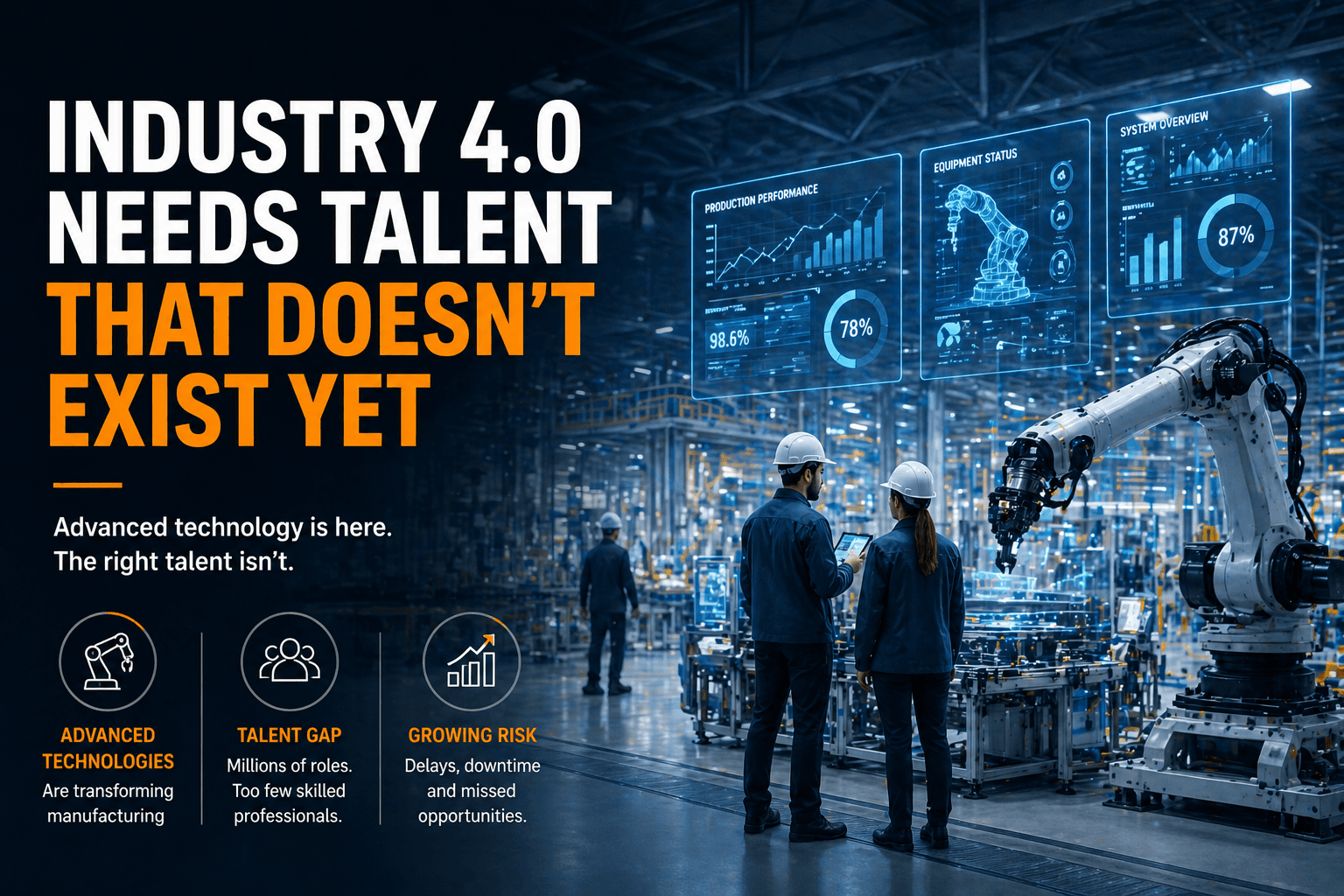
Industry 4.0 has effectively rewritten the operational standards for manufacturing. Technologies such as AI, robotics, and smart systems have transitioned from "emerging" concepts to the literal bedrock of modern infrastructure. However, a significant bottleneck remains: most enterprises cannot source enough personnel with the functional expertise required to manage these systems in a live production environment.
The standard response is a "hire-and-hope" strategy. Organisations pursue external experts, only to discover that even the most qualified recruits require months to master specific internal cultures and workflows. Meanwhile, the most viable talent pool is already on the payroll. Frontline personnel—the individuals who possess an intimate understanding of the facility’s nuances—remain stalled in their progression because they lack the formal credentials mandated for advanced roles.
At Medhavi Skills University (MSU), we address this through a different framework. Work-Integrated Skill-Based Higher Education provides a mechanism to credential an existing workforce without necessitating career breaks. It is a process of converting proven, loyal employees into technical leaders while maintaining absolute operational continuity.
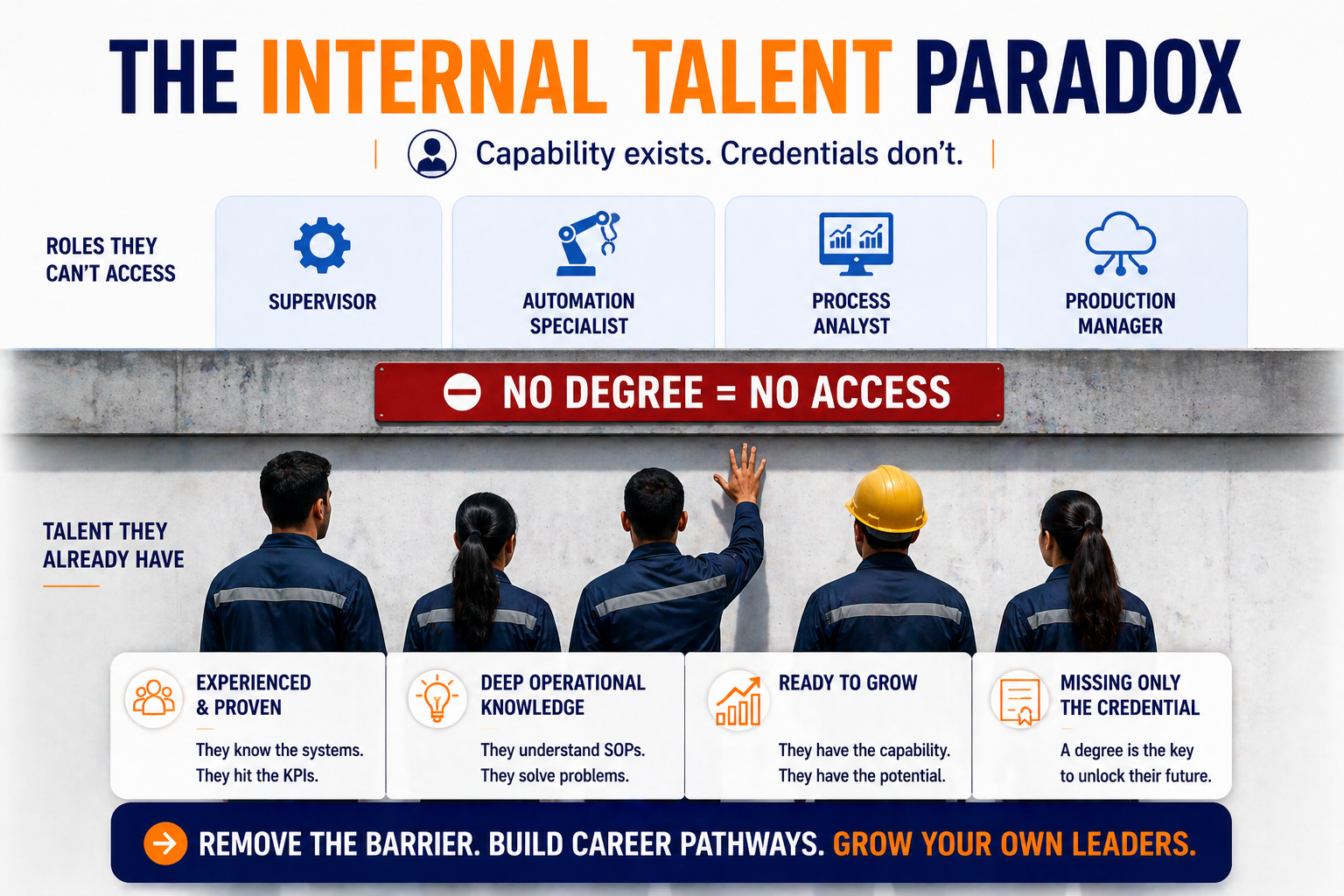
The Internal Talent Paradox
As production floors become more sophisticated, the functional nature of work shifts. Manual tasks are phased out in favour of data-led decision-making. This creates an immediate demand for roles that require a synthesis of technical literacy and deep, on-the-ground experience.
The ideal candidates are already within the organisation. Frontline staff have years of practical experience and understand the facility's nuances more deeply than any external recruit could. They grasp the SOPs. They hit the KPIs. They often identify system issues before they escalate.
The primary obstacle is a "paper ceiling." Strict HR policies and organisational structures frequently block these individuals from advancing because they do not hold a formal degree. This forces enterprises into a cycle of expensive external recruitment for roles that internal staff could fill—if they were properly credentialed. With the possibilities of India facing a projected deficit of 29 million skilled professionals by 2030, keeping internal talent on the bench is no longer a sustainable business practice.
Credentialing the Workforce: A Work-Integrated Approach
Work-Integrated Skill-Based Higher Education solves this by enabling employees to earn UGC-recognised degrees and NCVET-aligned certifications while continuing their roles on the floor. There are no career breaks.
How Work-Integrated Programmes Operate in Practice
MSU partners with enterprises to co-create role-specific degree programmes. If the business needs people capable of operating automated lines, the curriculum focuses on those specific systems and SOPs. If predictive maintenance is the priority, the programme focuses on the data systems and diagnostic tools for that role.
The curriculum is designed around the specific technologies that define performance in your environment. Academic assessment is linked to workplace performance—demonstrating competence under real operational conditions. The degree is nationally recognised, but the skills are immediately applicable to the roles the enterprise needs to fill.
Building Career Pathways Through Credentials
At Medhavi Skills University, we recognise that professional motivation is tied to visible growth. It demonstrates that the organisation is investing in their formal education—not merely providing "one-off" training, but facilitating degrees that carry societal respect and enable genuine progression. Every credit earned moves a frontline worker closer to a role that was previously inaccessible.
For the enterprise, this builds a proactive pipeline of promotion-ready talent. Employees who have excelled in frontline roles and completed their MSU degrees become the primary candidates for supervisory and technical management positions. The organisation already knows their work ethic, and they already understand the culture. The MSU degree provides the formal credential that organisational policy requires to finally approve that advancement.
Reducing Ramp-Up Time and Hiring Risk
When Industry 4.0 roles are filled through external hiring, even qualified candidates require months of onboarding. They need to learn the company's specific systems, understand workflows, adapt to culture, build relationships, and establish credibility.
Employees promoted from within require minimal ramp-up. They already understand how the facility operates. They already understand systems, workflows, and performance expectations. When they move into Industry 4.0 roles, they are not learning the business from scratch. They are applying new technical skills to operational contexts they already understand deeply.
Every role filled internally saves recruitment costs, onboarding expenses, and the productivity loss that occurs while external hires learn the organisation. It also reduces retention risk. Employees who earned degrees through their employer and were promoted into better roles do not leave easily. They have invested years in building their career within that organisation, and the credential they earned has value precisely because of where they earned them.
Aligning Learning with Operational Performance
One of the distinctive features of Work Integrated Skill Based Higher Education is the direct connection between academic assessment and workplace performance. In WISE programmes, assessment includes how well employees meet production KPIs, follow established SOPs, solve operational problems, and demonstrate competence under real conditions.
This alignment ensures that what is taught, learned, and credentialed directly supports what the enterprise needs operationally. Employees are developing the specific capabilities required to perform defined roles within their organisation's production environment.
For enterprises, this creates accountability. The degree programme is not separate from operational performance. It is integrated with it. Employees who complete the programme have demonstrated that they can meet the standards the role requires — academically and operationally.
Strategic Impact for Industry 4.0 Enterprises
The talent challenge in Industry 4.0 is not just about filling positions. It is about operational capability. Manufacturers consistently report that skill shortages are affecting their ability to maintain production targets and profit margins. Many have delayed or limited Industry 4.0 adoption because they cannot find people capable of operating the systems reliably. This model applies across sectors where advanced technologies require both technical expertise and operational experience.
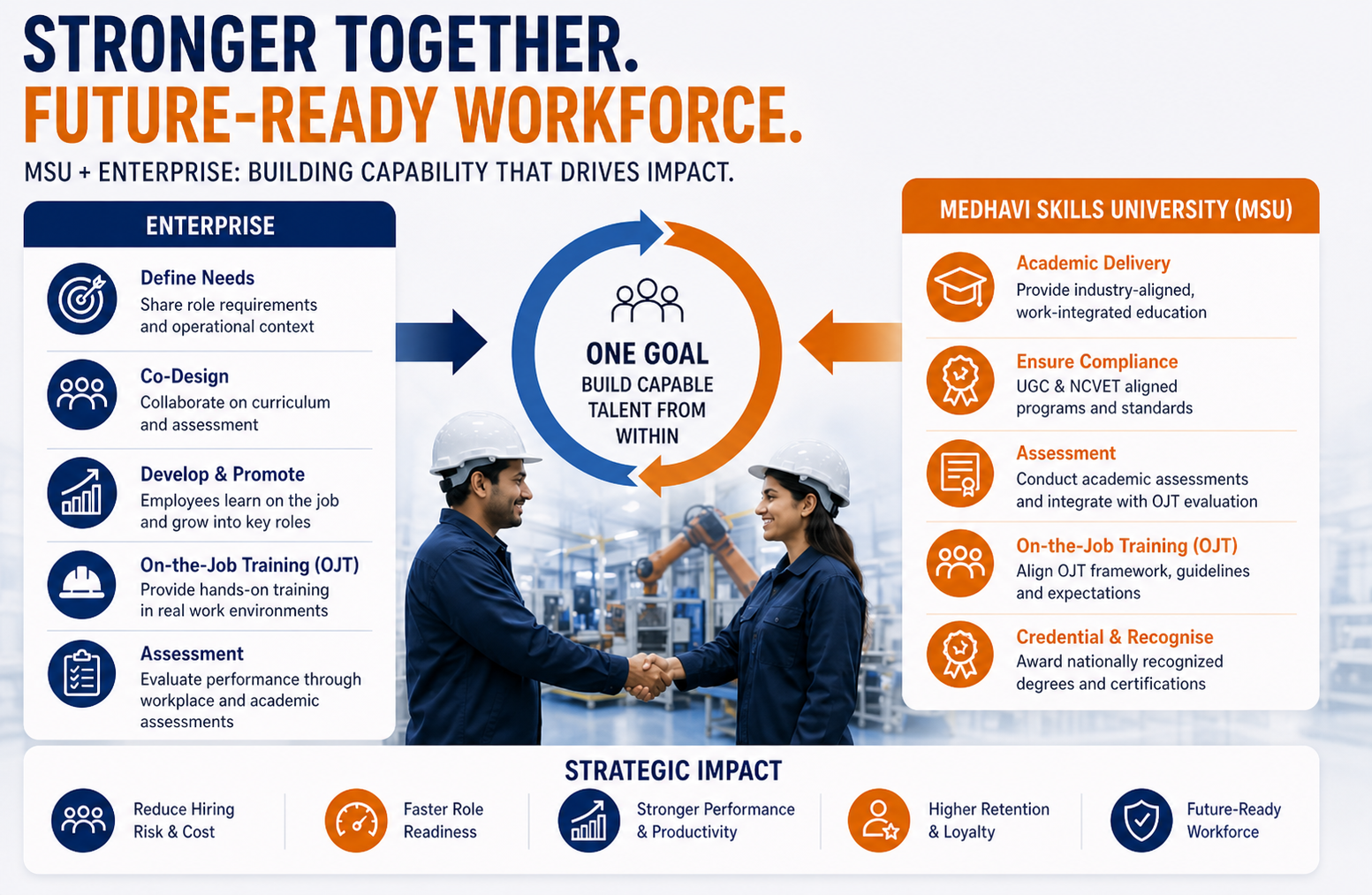
The relationship between MSU and the enterprise is fundamentally collaborative. We manage academic delivery, regulatory compliance under UGC and NCVET frameworks, structured assessments, and credential issuance. The enterprise provides operational context, defines role requirements, enables on-the-job training (OJT), and participates in curriculum design. Together, we build workforce capability that serves both the employee’s career growth and the enterprise’s operational needs.
How Enterprises Collaborate with MSU
Collaboration typically begins with workforce mapping to identify which frontline employees are performing well and which roles the enterprise needs to fill as Industry 4.0 capabilities expand. From there, MSU and the enterprise co-design curriculum, assessment frameworks, and learning structures that align academic progression with career advancement pathways.
Employees remain in their current roles while enrolled in degree programmes. Their work becomes part of their education — SOPs they follow, KPIs they meet, problems they solve, all contribute to their academic progress. As they complete the programme, they become eligible for promotion into the roles the enterprise needs filled.
MSU manages all academic requirements, ensures compliance with UGC and NCVET standards, and issues nationally recognised credentials. The enterprise defines what operational competence looks like and participates in assessing whether employees have demonstrated it. The outcome is a workforce that is both formally credentialed and operationally capable.
Conclusion: Building Capability from Within
As Industry 4.0 becomes the core infrastructure of manufacturing, you have to move from "buying" talent to "building" it. Your most experienced people are already there; they just need the pathway to move up.
Work-Integrated Skill-Based Higher Education provides that ladder. The infrastructure is ready. The regulatory frameworks are in place through UGC and NCVET recognition. The only question is how quickly you can implement it so that your internal talent keeps pace with your technology investment. The organisations that act now will do more than just reduce hiring costs—they will architect the workforce that defines their next decade of success.
How should we structure the curriculum for your first cohort of future supervisors?