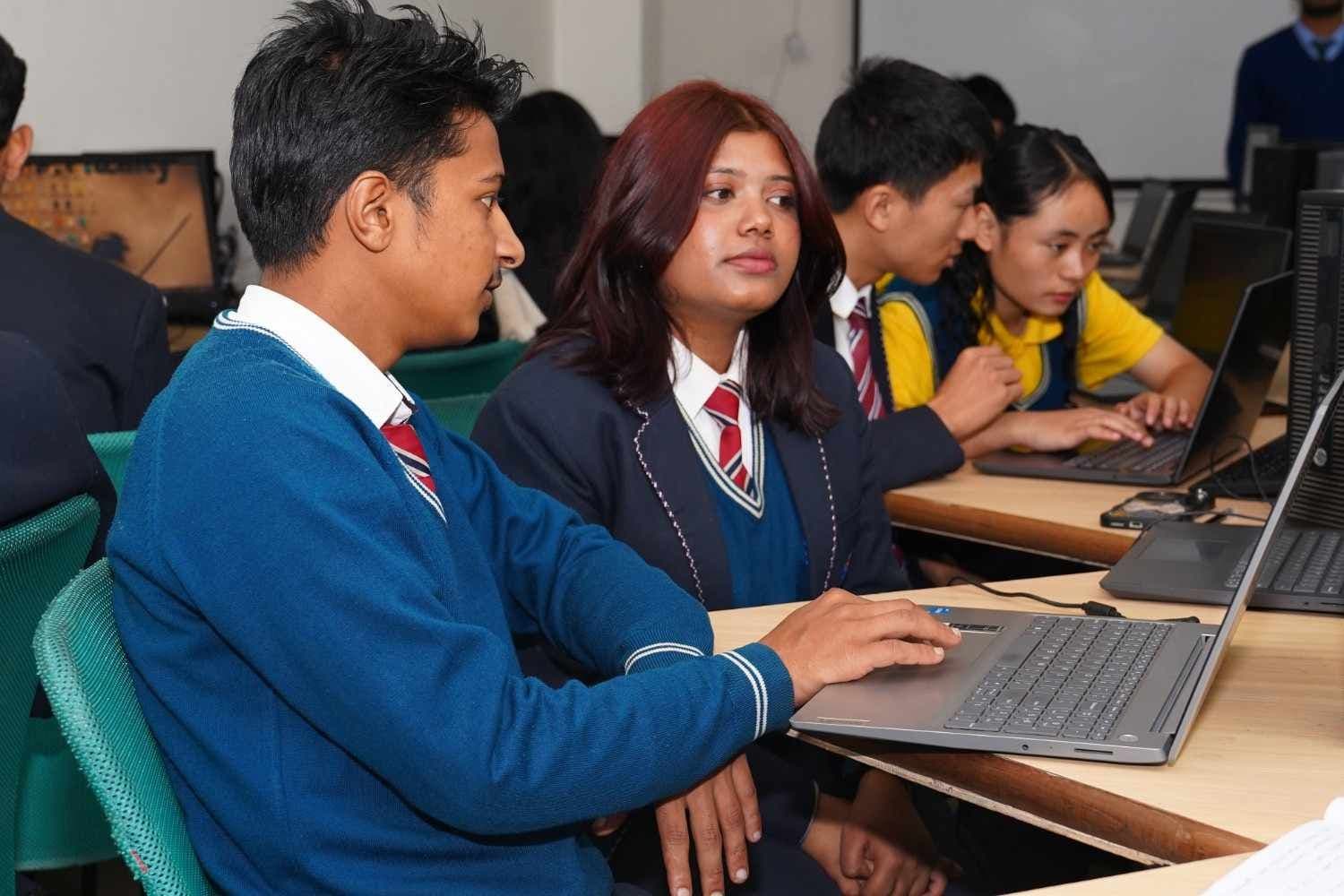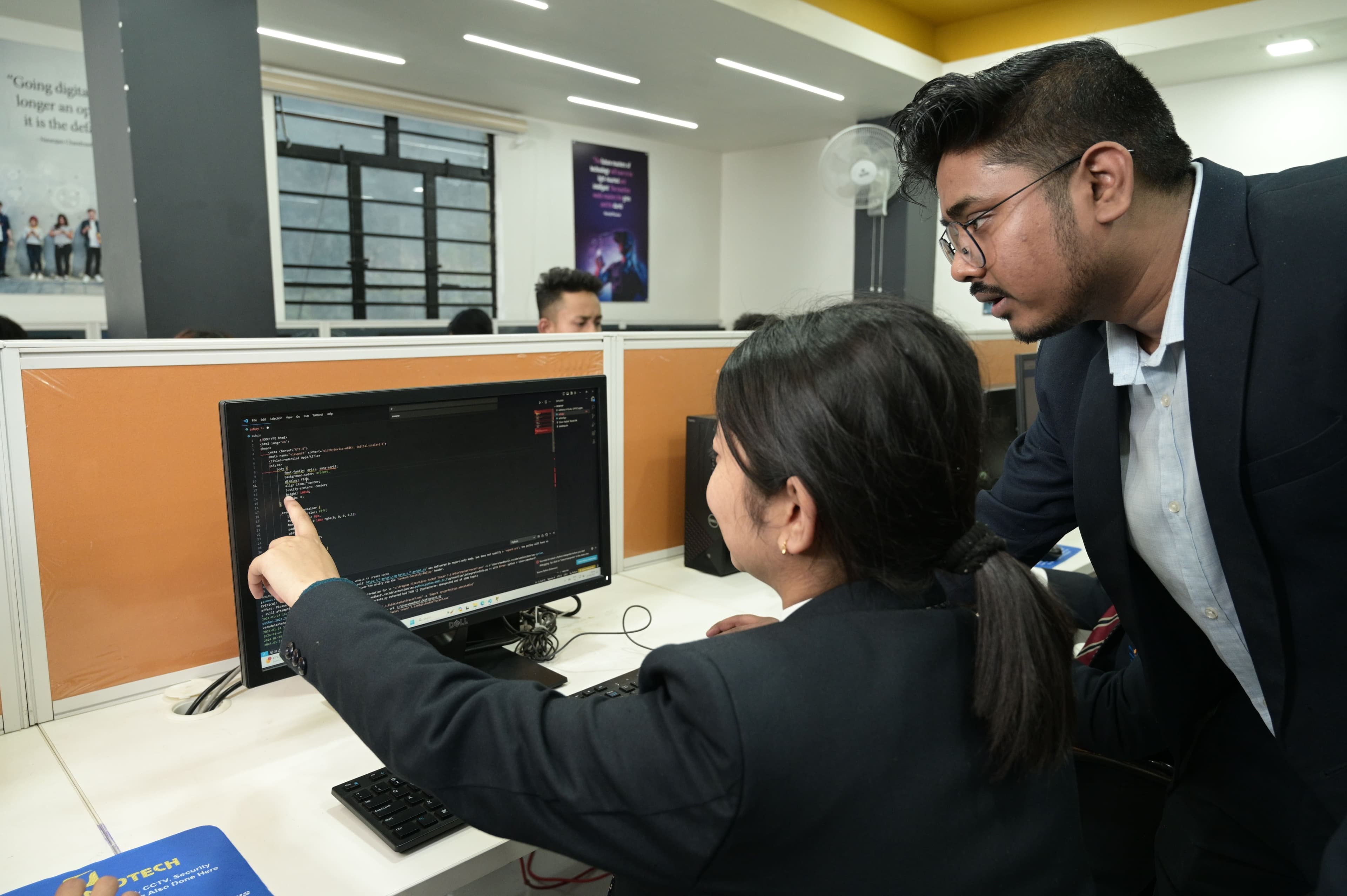
University education, at its best, should feel like an encounter with the world, not a withdrawal from it. At Medhavi Skills University, two of the most distinctive features of the student experience are skill electives and field trips. Together, they ensure that learning is not confined to four walls. The classroom expands into industries, markets, production facilities, and professional environments, and students emerge from each experience sharper, more aware, and more prepared.
This blog explores what skill electives and field trips are, how they work at MSU, what students gain from them, and why they matter far beyond the duration of the degree.
What Are Skill Electives and Why Do They Matter in Higher Education?
Skill electives are carefully curated, credit-bearing course modules that sit outside a student''s core programme requirements. They are designed to develop competencies that complement, and significantly enhance, a student''s primary area of study. Unlike traditional electives that typically offer more of the same academic content in adjacent subjects, skill electives at MSU are explicitly oriented towards professional and life skills that have direct industry relevance.
A hotel management student might choose a skill elective in digital marketing, gaining the ability to promote a property or business online. A culinary arts student might take an elective in entrepreneurship, building the foundation for a future food business. The underlying logic is that the most effective professionals are rarely one-dimensional, they bring a combination of domain expertise and broader capabilities that allow them to add value across functions.
Employers have consistently cited multi-skilled candidates as preferred hires. Skill electives are MSU''s structured response to that preference.
How Skill Electives Work at MSU
MSU''s skill elective system is designed to be accessible, flexible, and genuinely useful. Each student is required to complete a defined number of elective credits across their programme, and the choices available span a broad range of professional competencies. Here is a representative overview of how a student might navigate their elective pathway:
| Elective Category | Example Modules | Best Suited For |
| Digital & Technology Skills | Social Media Management, Basic Data Analytics, Digital Communication | Students in hospitality, retail, business, management |
| Entrepreneurship & Business | Business Ideation, Financial Basics for Startups, Pitching and Presentation | Students considering self-employment or business management |
| Communication & Leadership | Professional Communication, Public Speaking, Team Leadership | All students, particularly those in client-facing roles |
| Sustainability & Ethics | Sustainable Business Practices, Responsible Tourism, Environmental Awareness | Hospitality, culinary, and travel students |
| Health & Wellness | Workplace Wellness, Nutrition Basics, Mental Fitness at Work | All students, particularly those in high-pressure service industries |
Students select electives in consultation with academic advisors and are encouraged to choose based on their career goals rather than convenience. The result is a personalised learning journey that reflects each student''s professional aspirations.
Skills Developed Through Electives and Field Exposure
The combination of skill electives and field experiences creates a distinctive and powerful learning environment. The table below maps some of the key competencies developed through this model and their professional application:
- Digital Marketing Electives → Online & Brand Skills
Students develop capabilities in content creation, SEO fundamentals, and social media strategy, enabling them to contribute to property promotion, brand positioning, and digital customer acquisition. - Entrepreneurship Electives → Business & Financial Acumen
Learners gain exposure to business planning, cost structures, and idea validation, forming a strong foundation for launching ventures such as food businesses, hospitality services, or consultancy practices. - Market Survey Field Trips → Research & Decision-Making Skills
Field exposure builds hands-on understanding of data collection, supplier evaluation, and market dynamics, directly applicable to menu costing, procurement, and business development decisions. - Industry Site Visits → Operational Awareness
Observing real-world systems and workflows helps students understand how organisations function, enabling faster adaptation and effectiveness in professional environments post-graduation. - Communication Workshops → Professional Interaction Skills
Students strengthen both verbal and written communication, preparing them for client interactions, team collaboration, and high-stakes professional situations. - Leadership Modules → Team & Decision-Making Capabilities
Exposure to leadership frameworks builds skills in team management, conflict resolution, and decision-making, essential for supervisory and managerial roles across industries.
What Are Field Trips and Why Are They Important for University Students?
At MSU, field trips are not nostalgic holdovers from school. They are deliberately designed educational experiences in real professional environments, chosen specifically because they offer students a quality of insight that no lecture or textbook can replicate.
A field trip to a hotel''s back-of-house operations teaches a student more about supply chain logistics in two hours than a semester of theory. A visit to a local produce market teaches a culinary student about ingredient sourcing, price dynamics, and supplier relationships in a way that is immediate, sensory, and lasting.
The distinction between an educational field trip at university level and a school excursion lies in intentionality. MSU field trips are structured learning experiences with defined objectives, pre-visit preparation, active observation tasks, and post-visit academic reflection. They are academic exercises conducted outside the classroom.
Role of Field Trips in Student Development
The impact of field experiences on student development operates across multiple dimensions:
• Cognitive: Students see abstract concepts become concrete. Theory moves from the page into the physical, observable world.
• Professional: Students interact with working professionals, observe workplace culture, and begin to understand the standards and expectations of their chosen industry.
• Personal: The challenge of navigating a real-world environment, with all its complexity, unpredictability, and human dynamics, builds adaptability, curiosity, and confidence.
• Academic: Field experiences generate material for reflection, analysis, and coursework that is grounded in reality rather than speculation.
| Students who have seen how things work in the real world ask better questions in class, write more grounded assessments, and approach their careers with a clarity that purely classroom-educated graduates often lack. |
Key Benefits of Skill Electives and Field Trips Combined
The real power of MSU''s approach is the combination. Skill electives build competencies in a structured, progressive manner. Field trips provide immediate, unmediated contact with the industry those competencies are designed for. Together, they produce a student who is both versatile and contextualised, someone who understands the theory, has tested it against reality, and is building a portfolio of experiences to talk about in any professional interview.
• Broader Professional Profile: Skill electives ensure graduates are not one-trick specialists. They are multi-dimensional professionals who can contribute across functions.
• Contextualised Knowledge: Field trips ensure that academic knowledge is not abstract. Students understand not just the ''what'' but the ''how'' and ''why'' of their industry.
• Higher Confidence in Professional Situations: Having navigated real environments during their degree, students are significantly less intimidated by professional settings post-graduation.
• Stronger Career Stories: Both skill electives and field trips give students specific, concrete experiences to reference in interviews, portfolios, and professional conversations.
• Industry Awareness: Regular exposure to the industry keeps students informed about current trends, practices, and challenges, making them more thoughtful and relevant candidates.
Field in Action: What Students Actually Experience
At MSU, field trips are not standalone activities, they are designed as part of a larger academic and skill-building process. Students engage with real environments, document their observations, and translate these into meaningful academic and creative outputs.
A recent interdisciplinary initiative illustrates this approach. Students worked on developing a tour manual for Sikkim, one of India’s smallest yet culturally rich states. The project focused not only on popular tourist destinations, but also on lesser-known locations, local homestays, and responsible tourism practices. The objective was to build a deeper, more nuanced understanding of how tourism ecosystems function beyond surface-level travel experiences.
This work was grounded in structured field exposure:
- Chayatal, West Sikkim (Bermiok Campus)
Students explored a region known for both its emerging tourism potential and its cultural significance to the Limboo community. Through observation, interaction, and documentation, they captured insights on local history, cultural heritage, and community practices, translating these into structured academic outputs. - Rongaychu, East Sikkim (Singtam Campus)
At Rongaychu, students engaged with the natural environment and local stakeholders, including site caretakers. The experience combined environmental awareness with reflective learning, resulting in student-authored travelogues that are now part of their personal portfolios.
What makes these experiences meaningful is the output they generate. Students are not passive participants, they actively research, document, analyse, and create. Collaboration across skill electives, including field research, documentation, and design, ensures that each experience results in work that is both academically grounded and professionally relevant.
Skill Electives vs Traditional Learning: What Is the Difference?
| Dimension | Traditional Learning | Skill Electives + Field Trips at MSU |
| Content Focus | Subject-specific theory and concept | Multi-disciplinary, professionally oriented competencies |
| Assessment Method | Written examinations, assignments | Applied projects, reflective reports, field assessments |
| Industry Relevance | Aligned to syllabus | Aligned to current employer expectations |
| Student Agency | Fixed curriculum path | Choice-based, personalised elective pathway |
| Real-World Contact | Minimal to none within curriculum | Regular and structured through field trips |
| Post-Graduation Value | Qualification-based | Qualification plus demonstrated, diverse skills |
Alignment with NEP 2020 and Skill-Based Education
The National Education Policy 2020 places multi-disciplinary education and experiential learning at the centre of its vision for Indian higher education. It calls for flexible curricula that allow students to study across domains, earn credits for vocational and skill-based learning, and engage with the real world as part of their academic journey.
MSU''s skill elective and field trip model is a direct, operational expression of this vision. By embedding both within the formal academic structure, crediting them, assessing them, and integrating them into the degree profile, MSU ensures that this philosophy is not theoretical. It is lived by every student, across every year of their programme.
Conclusion: Career Outcomes Enabled by Skill Electives and Field Trips
The career outcomes of students who engage meaningfully with skill electives and field experiences are measurably stronger than those who experience only traditional classroom education. The reasons are straightforward:
They have more to talk about. Every skill elective completed and every field visit undertaken generates a specific, concrete professional story, a competency developed, a challenge navigated, an insight gained. These are the building blocks of a compelling professional profile.
They have more to offer. Multi-skilled, industry-aware graduates are versatile hires who can adapt to changing roles and contribute across functions. In a dynamic economy, this versatility is increasingly valuable.
They are more certain of their direction. Students who have experienced multiple professional environments during their degree make more deliberate, confident career choices, and that clarity benefits both them and the organisations they join.