
India produces millions of graduates every year, yet a significant percentage struggle to find relevant employment. The gap between education and industry requirements has made employability one of the biggest concerns in higher education today.
This is where skill universities in India are creating a shift. By focusing on practical learning, industry exposure, and job-oriented education, they are helping students become job-ready rather than just degree holders.
Overview: How Skill Universities Improve Employability in India
Skill universities are designed to bridge the gap between higher education and real-world job requirements. Unlike traditional systems that emphasize theoretical knowledge, these institutions focus on application-based learning and industry relevance.
Their approach combines classroom teaching with hands-on experience, ensuring that students graduate with both knowledge and practical skills. This model directly contributes to improving employability skills in India.
Benefits of Skill-Based Education for Students
Skill-based education offers several advantages that directly impact a student’s career readiness.
- Focus on job-ready skills instead of rote learning
- Early exposure to real work environments
- Better understanding of industry expectations
- Increased confidence through practical experience
- Higher chances of employment after graduation
These benefits make skill development universities an attractive option for students looking for career-oriented education in India.
Skill-Based Learning vs Traditional Education
The difference between skills vs traditional education lies in how students are prepared for the future.
Traditional education often prioritizes theory, exams, and academic knowledge. While this builds a conceptual foundation, it may not always translate into job readiness.
Skill-based learning, on the other hand, emphasizes practical training, problem-solving, and real-world application. It prepares students to perform tasks, handle responsibilities, and adapt to workplace environments from day one.
This shift toward practical learning universities reflects the changing demands of employers.
Key Skills Students Gain from Skill Universities
Skill universities focus on developing a mix of technical and soft skills that are essential for modern careers.
- Communication and interpersonal skills
- Critical thinking and problem-solving
- Technical and domain-specific expertise
- Adaptability and teamwork
- Time management and professional discipline
These employability skills for students are critical in ensuring long-term career growth and success.
How to Improve Employability Skills in Students
Improving employability requires a structured approach that combines education with experience. Skill universities achieve this by integrating multiple elements into their curriculum.
- Industry-integrated curriculum aligned with market needs
- Internship opportunities during the course
- Project-based and hands-on learning
- Continuous skill assessment and feedback
- Exposure to real-world challenges
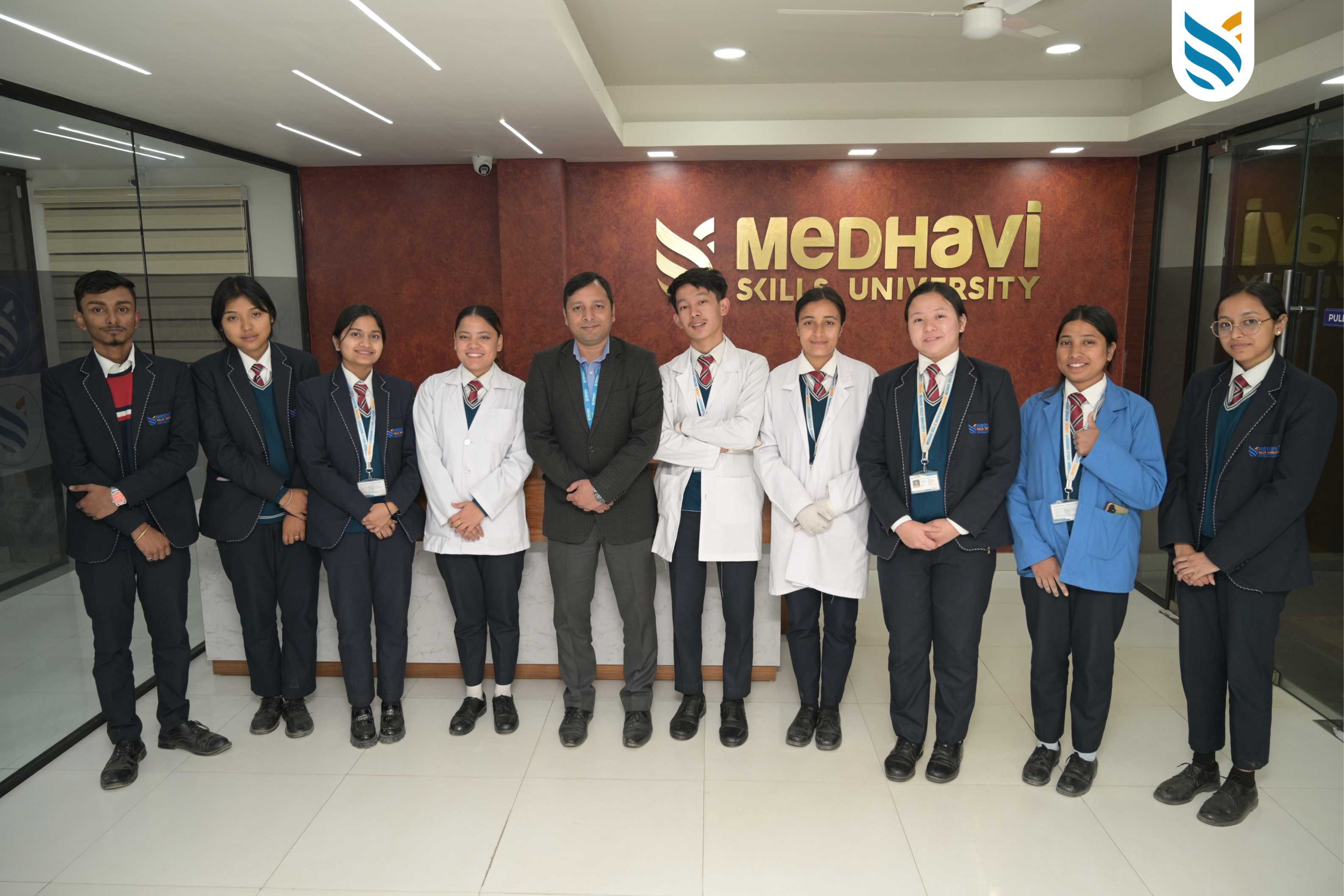
Institutions like Medhavi Skills University follow this model by offering work-integrated learning programs that allow students to gain experience while studying.
Job-Oriented Courses After 12th in India
Students today are increasingly opting for job-oriented universities in India that offer specialized programs after 12th. These courses are designed to align directly with industry requirements.
Popular options include:
- Healthcare and allied health science programs
- Hospitality and tourism management
- Information technology and computer applications
- Business and management courses
- Digital marketing and media programs
Such courses help students build job-ready skills early in their careers.
Role of Practical Learning in Career Growth
Practical learning plays a crucial role in shaping a student’s career. It allows individuals to apply theoretical concepts in real situations, improving both understanding and performance.
Hands-on learning universities ensure that students are exposed to real work environments, tools, and challenges. This experience not only enhances skill development but also builds confidence and adaptability.
Skill Universities and Industry Readiness
One of the key strengths of skill development universities is their focus on industry readiness. Their curriculum is designed in collaboration with industry partners to ensure relevance and applicability.
Students are trained on current tools, technologies, and practices used in their respective fields. This reduces the learning curve when they enter the workforce and makes them more valuable to employers.
How Work-Integrated Learning Helps Students
Work-integrated learning programs are one of the most effective ways to improve employability. They combine education with real-world work experience, allowing students to learn while they earn.
This approach helps students:
- Gain practical experience before graduation
- Understand workplace expectations
- Build professional networks
- Develop confidence in handling job responsibilities
Medhavi Skills University is known for implementing this model effectively, making students industry-ready from the start.
Best Skill Development Programs in India
Skill development courses in India are expanding across multiple industries, offering students a wide range of career options. Programs that focus on healthcare, IT, hospitality, and business are particularly in demand.
These programs emphasize employment-focused education and are aligned with future skills for students in India, ensuring long-term career relevance.
Conclusion
The future of higher education in India is increasingly focused on employability. Skill universities are leading this transformation by offering practical, industry-oriented education that prepares students for real-world careers.
By bridging the gap between education and employment, they are helping students acquire the skills needed to succeed in a competitive job market. Institutions like Medhavi Skills University are setting new benchmarks in career-oriented education by combining academic learning with hands-on experience.