
Understanding Pharmacy Courses After 12th: A Complete Guide
Pharmacy Courses after 12th are considered one of the best ways to enter the field of healthcare, medicine or pharmaceutical science for students. With India's pharmaceutical industry growing rapidly, qualified candidates are highly sought after to fill positions in hospitals, research labs, manufacturing facilities and healthcare organizations. The most commonly selected courses include the B.Pharm course and the D.Pharm course because of the differences in types of job opportunities they provide.
Pharmaceutical education can establish an excellent foundation for building a successful career for any student interested in becoming a registered pharmacist, developing new medications or advancing to higher education. Medhavi Skills University is one such university that is doing a great job in equipping students with industry-integrated skills and practical hands-on experience which make them future proof in this demanding job market.
Types of Pharmacy Courses After 12th
Students wanting to pursue a pharmacy profession have many options when selecting a pharmacist course after 12th.
Programme | Programme Duration | Qualification Awarded | Career Focus |
D.Pharm | 2 years | Diploma in Pharmacy | Entry-Level Practice |
B.Pharm | 4 years | Bachelor's Degree in Pharmacy | Advanced Practice & Industry |
Pharm.D | 6 years | Doctorate Degree in Pharmacy | Clinical Practice & Patient Care |
M.Pharm | 2 years | Master's Degree in Pharmacy | Concentration or Research |
From all the options available to students, D.Pharm and B.Pharm are the two most popular courses due to the employment options available in the industry.

B.Pharm and D.Pharm Course Details
Bachelor of Pharmacy (B.Pharm)
The Bachelor of Pharmacy (B.Pharm) course is a four year undergraduate program that usually includes pharmaceutical sciences, drug development, healthcare systems and medication management.
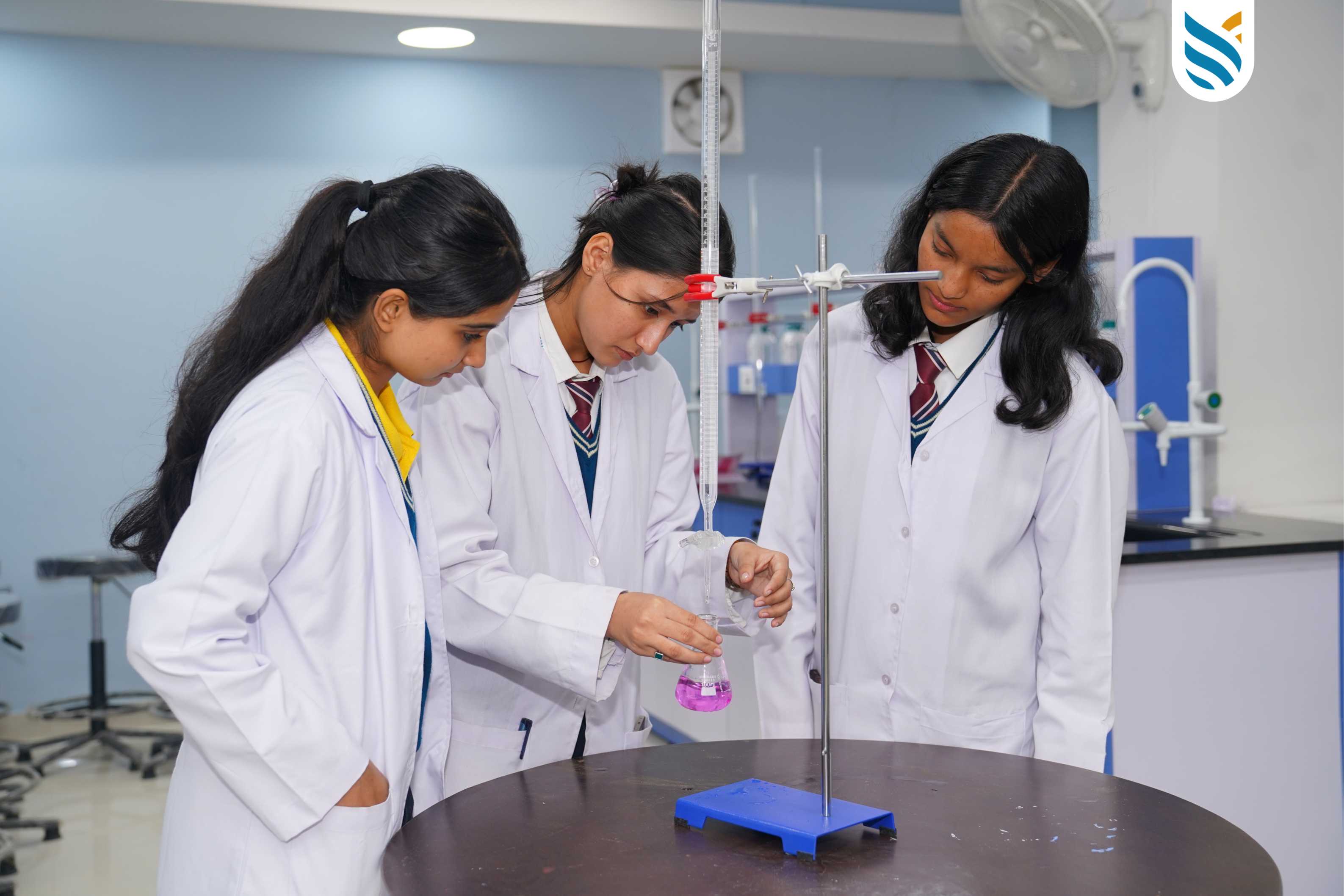
Students enrolled bachelor in pharmacy in India at institutions like Medhavi Skills University gain both theoretical knowledge through coursework and practical skills through hands-on experience, on-the-job learning and industry exposure. The programme also provides students with substantial practical exposure through labs, projects that require them to work with industry professionals and internships in real pharmacy settings.
Bachelor in Pharmacy Subjects
Some of the key bachelor in pharmacy subjects include:
- Human Anatomy and Physiology
- Pharmaceutical Chemistry
- Pharmacology
- Pharmaceutics
- Biochemistry
- Pharmaceutical Analysis
- Medicinal Chemistry
- Hospital Pharmacy
- Clinical Pharmacy
Diploma in Pharmacy (D.Pharm)
The Diploma in Pharmacy (D.Pharm) is a two year programme that is intended for those individuals who wish to pursue careers in pharmacy more quickly. This programme covers the basic concepts and theories of pharmacy and provides students with experience in dispensing medications and providing health services to the community.
Many of those students searching for information on b pharmacy 2 year course details are actually referring to the two year D.Pharm program instead of the four year B.Pharm.
Eligibility Criteria for Pharmacy Courses
D Pharma Eligibility
To apply for a Diploma in Pharmacy, candidates typically need to meet the following criteria:
- Must have completed their Class 12 from a recognized school board.
- Must have taken Physics and Chemistry as their mandatory subjects for Class 12 and Biology and/or Mathematics as additional subjects.
- Meet the minimum percentage requirement set by the institution they are applying for.
Eligibility for B.Pharm
Some of the major requirements for admission in Bachelor in Pharmacy programmes include:
- Must have completed Class 12 with Physics, Chemistry and either Biology or Mathematics.
- Must have attained the minimum percentage as set by the institution.
Students interested in B.Pharm admission for the year 2026 should be aware of the admission notification dates and eligibility updates from their chosen institutions. Medhavi Skills University provides a comprehensive resource to prospective students throughout the entire admissions process on the eligibility of the programmes offered, as well as information related to the curriculum and future career opportunities.
Eligibility at a Glance
Requirement | B.Pharm | D.Pharm |
Class 12 | Required | Required |
Science Background | Required | Required |
Physics & Chemistry | As prescribed | As prescribed |
Biology/Mathematics | As prescribed | As prescribed |
Minimum Marks | As per institution | As per institution |
B.Pharm Admission: Step-by-Step Process
Students interested in b pharmacy admission can follow these general steps:
Class 12 with the required Science subjects
↓
Check b pharmacy eligibility
↓
Shortlist universities
↓
Compare b pharmacy course details and fees
↓
Complete the bpharm admission application
↓
Submit required documents
↓
Complete admission formalities
↓
Begin the B.Pharm course
Admission requirements and procedures differ between universities. Students should always refer to the institution's latest admission guidelines.
What Do You Study in a B.Pharm Course?
Core Areas of Study
Subject Area | What Students Learn |
Pharmaceutics | Formulation and dosage forms |
Pharmacology | Effects and actions of medicines |
Pharmaceutical Chemistry | Chemical properties of drugs |
Pharmacognosy | Medicines and products from natural sources |
Pharmaceutical Analysis | Testing and analysis of pharmaceutical substances |
Medicinal Chemistry | Drug structure and development |
Clinical Pharmacy | Application of pharmacy in healthcare |
Hospital Pharmacy | Pharmacy services in healthcare settings |
Career Opportunities After B.Pharm
There is an increase in pharmacy career scope due to advances in healthcare, biotechnology and pharmaceutical manufacturing.
B.Pharm graduates can find a variety of career opportunities, including:
- Pharmacists
- Drug Inspectors
- Clinical Research Associates
- Medical Sales Representatives
- Pharmacovigilance Specialists
- Regulatory Affairs Executives
- Quality Control Analysts
- Production Executives
- Hospital Pharmacists
- Pharmaceutical Sales Managers
The rapidly growing demand for pharmaceutical professionals in the field of research and development makes pursuing a career in pharmacy after 12th very appealing.
Pharmacy Career Scope
Sector | Career Opportunities |
Pharmaceutical Industry | Production, formulation, manufacturing |
Quality | Quality Control, Quality Assurance |
Research | Research Associate, Clinical Research |
Regulatory Affairs | Regulatory Executive |
Pharmacovigilance | Drug Safety Professional |
Hospitals | Hospital Pharmacy |
Sales & Marketing | Medical Representative, Product Executive |
Government Sector | Opportunities subject to eligibility and recruitment |
Education | Teaching and academic roles with required qualifications |
Entrepreneurship | Pharmacy and healthcare businesses |
How to Build a Successful Pharmacy Career
- Choosing a recognised programme.
- Gaining practical exposure through internships and industry immersion.
- Developing knowledge of emerging pharmaceutical technologies.
- Obtaining professional registration where required.
- Pursuing specialisations or postgraduate studies for advanced roles.
When pursuing a successful career in the pharmacy field, students benefit from gaining valuable real-world industry experience through hands-on learning and internships. At Medhavi Skills University, students are given the opportunity to learn through both academic and workplace-based training via its skill-integrated curriculum that develops competencies required in the pharmaceutical industry.
B.Pharm vs D.Pharm: Key Differences
The following comparison makes it easier to understand the difference between the two programmes.
Feature | B.Pharm | D.Pharm |
Full Form | Bachelor of Pharmacy | Diploma in Pharmacy |
Course Duration | 4 years | 2 years |
Qualification | Bachelor's degree | Diploma |
Academic Level | Undergraduate degree | Diploma |
Course Depth | Broader and more comprehensive | Foundational |
Practical Learning | Laboratory and practical training | Practical training |
Career Scope | Wider range of roles | Primarily pharmacy-focused roles |
Higher Studies | Multiple opportunities | Further study subject to eligibility |
Ideal For | Long-term career growth | Shorter route into pharmacy |
D.Pharm vs B.Pharm Salary Comparison
Salaries in the pharmacy field are influenced by a variety of factors, including job role, work experience, location and employer.
Qualification | Entry Level Salary | Mid Career Salary |
D.Pharm | ₹2.0 Lakhs to 3.5 Lakhs | ₹4 Lakhs to 6 Lakhs |
B.Pharm | ₹3 Lakhs to 5 Lakhs | ₹6 Lakhs to 10 Lakhs |
Typically, average b pharmacy salaries are generally higher due to the larger number of job roles available like technician, researcher, manager, etc. versus graduates with only a Diploma in Pharmacy (D.Pharm).
Like the average pharmacy salary in India rises with increased professional experience, specialisation and postgraduate education.

Pharmacy Education & Career Opportunities at MSU
Conclusion
Pharmacy continues to be one of the most stable and rewarding professions in Indian healthcare. Whether you choose a D. Pharm to enter the workforce quickly or a B. Pharm to open up more opportunities for your career, there are many career opportunities available to you throughout the healthcare, research and pharmaceutical industries.
When choosing a pharmacy colleges in India, consider the school's exposure to the industry, the amount of practical training they deliver, the level of expertise of their professors and how much support they provide with placement. Institutions like Medhavi Skills University provide educational programmes that focus on skill-based instruction and are designed to meet the needs of the pharmaceutical industry, which enables students to have a successful career in the field.