
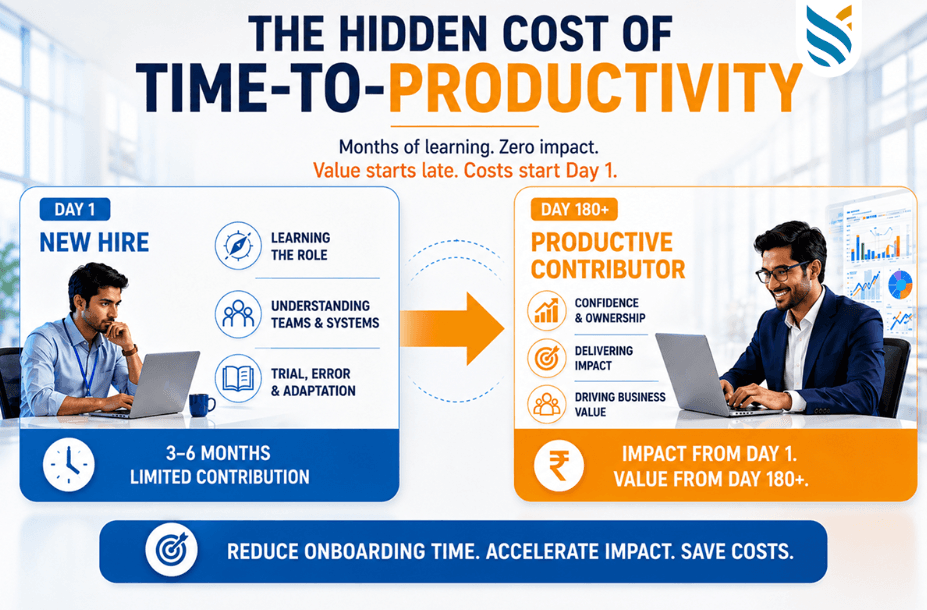
In the current Industry 4.0 landscape, "time-to-productivity" has evolved into a critical performance indicator. The conventional approach of recruiting for theoretical potential—followed by an extensive period of organisational "re-tooling"—is now a substantial financial burden. Business leaders frequently find themselves encumbered by a recurring challenge: allocating full compensation to new hires who fail to contribute meaningfully to strategic objectives for several months.
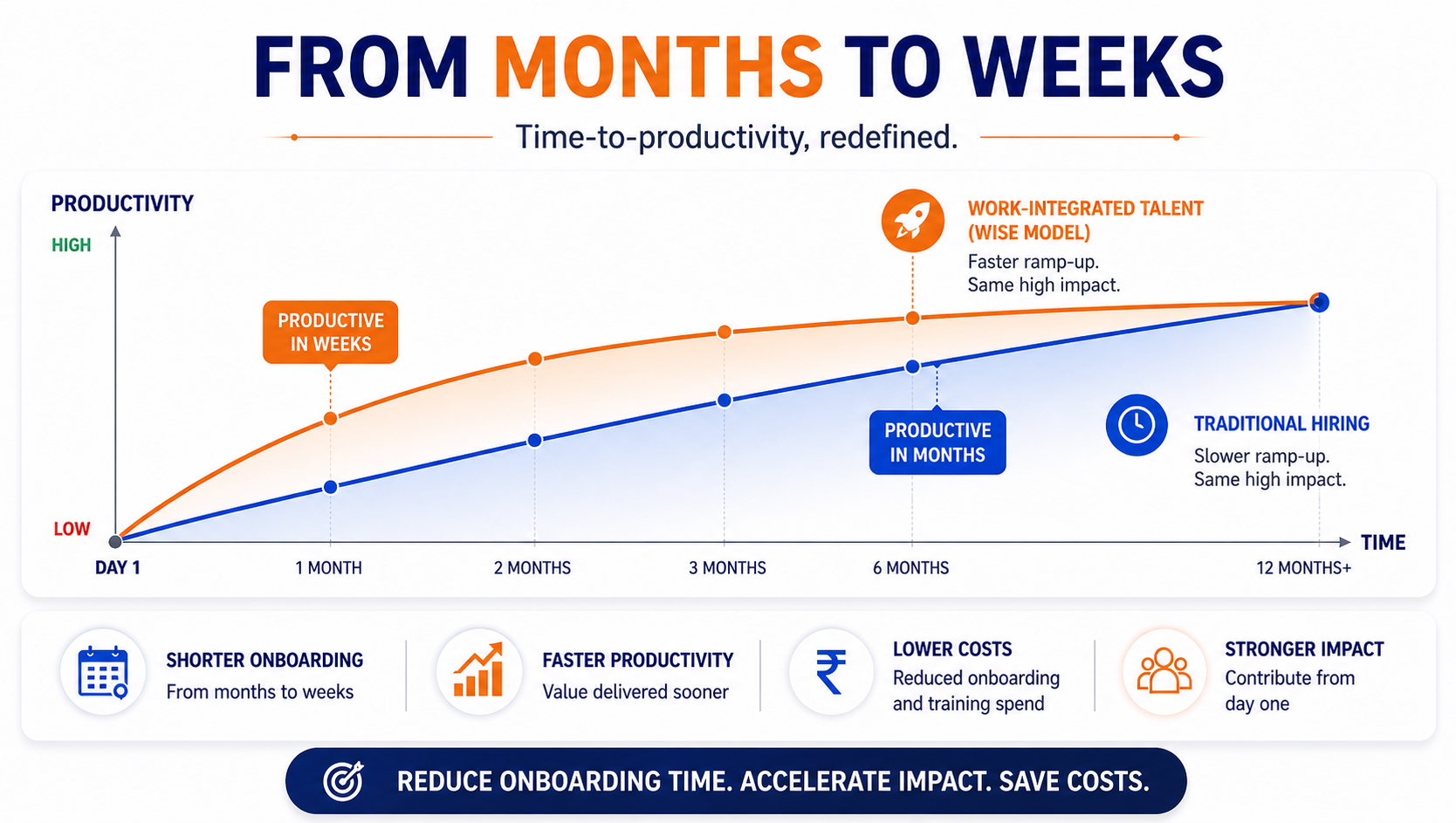
This "onboarding deficit" is a manageable variable rather than an inherent cost of doing business. By prioritising candidates from Work-Integrated Learning (WIL) environments—particularly those structured under the WISE framework—enterprises can effectively shift the learning curve into the educational phase. These individuals are not merely students; they are prepared professionals who arrive with a functional grasp of operational complexities from their first day of tenure.
The Compounding Costs of External Talent Dependency
Relying exclusively on the external labour market entails a series of predictable and compounding liabilities:
- Recruitment Expenditure: Substantial brokerage fees and the considerable time investment required from senior leadership.
- Productivity Latency: A significant window, often spanning three to six months, wherein new hires prioritise internal navigation over outcome-driven tasks.
- Loss of Institutional Knowledge: The departure of seasoned personnel creates a vacuum of specialised internal intelligence that external hires cannot immediately replace.
Research shows that organisations with structured onboarding can improve retention by 82% and productivity by over 70 percent but these gains assume the right talent was hired in the first place. When frontline employees have no clear career progression pathway, enterprises are forced into a cycle: hire externally for skilled roles, onboard and train, lose institutional knowledge when they leave, repeat. This model is not sustainable as skill demands accelerate and external talent becomes more expensive and harder to source.
Why Frontline Talent Stalls Without a Career Progression Pathway
Many frontline employees possess years of deep operational knowledge and proven performance. However, they hit a "paper ceiling." Without a proper career progression pathway and formal credentials (degrees or certifications) with institutional weight, they cannot compete for roles that require recognised qualifications.
Most corporate training focuses on short-term fixes: compliance, software updates, or one-off workshops. These are useful, but they don't provide the credentials needed for real career advancement. Internal badges or platform certificates simply don't carry the same weight as UGC-recognised degrees or NCVET-aligned certifications during a promotion review.
Work Integrated Skill-Based Higher Education (WISE): Building Internal Career Pathways
Work Integrated Skill-Based Higher Education (WISE) is an approach designed specifically to solve this problem. It enables enterprises to build structured career pathways for their existing frontline workforce while employees continue working - no career breaks, no lost productivity, no time off the floor.
How it works:
- Employees remain in their roles while enrolled in degree programs aligned to their functions
- Academic learning is integrated with training programs, with a curriculum co-designed by the enterprise and the university.
- Assessment is linked to workplace performance, ensuring learning is directly applicable.
- Credentials earned are nationally recognised - UGC degrees and NCVET certifications that enable career progression and employee recognition
For enterprises, this transforms corporate training programs from short-term interventions into long-term talent development infrastructure. The investment does not disappear when training ends. It accumulates as formal credentials that strengthen the internal career ladder and reduce dependency on external hiring.
How This Reduces External Hiring and Onboarding Costs
The financial impact is direct and measurable across multiple dimensions:
- Lowering the Barrier for Mid-Level Roles
When frontline staff earn degrees while working, they become the primary pool for supervisory and technical roles. This eliminates the "search and select" costs of external recruitment and removes the risk of cultural misalignment.
- Minimal Onboarding Requirements
This is where the cost advantage is most visible. Even a "perfect" external hire needs months to learn your specific culture and systems. An internal employee promoted via a WISE pathway already knows the business and the people. Their onboarding for a new role is measured in weeks, not months.
- Structural Retention Gains
One of the primary drivers of attrition is a lack of growth opportunity. When employees see that the organisation is investing in their future through recognised education, something their families value and that creates real career mobility, they are more likely to stay and grow with the company.
- Predictable Internal Talent Pipeline
External hiring is reactive. Work-integrated programs allow you to track a cohort’s progress and forecast exactly when your next wave of managers will be ready. This turns workforce planning into a proactive science.
Why Learning Pathways Matter for Career Advancement
Platform certificates and internal training badges have a ceiling. UGC-recognised degrees and NCVET certifications are the keys that unlock career progression. In the context of India’s National Education Policy 2020, these formal qualifications are essential for meeting regulatory standards and ensuring a workforce is truly promotable.
Work-integrated degree programs solve this by ensuring that frontline employees who perform well and complete their studies earn credentials with institutional weight. These are degrees that carry academic and vocational recognition, that meet regulatory standards for workforce development under India's National Education Policy 2020, and that position employees as qualified candidates for internal advancement.
For business leaders, this distinction is critical. Investing in skill development that does not lead to recognised credentials creates a workforce that is trained but not promotable. Investing in degree pathways creates a workforce that can climb the career ladder without the organisation needing to hire externally at every level.
How Medhavi Skills University Enables This for Enterprises
At Medhavi Skills University, we have built our WISE framework specifically to operationalise work-integrated skill-based education at an enterprise scale. As a UGC-recognised university and NCVET-aligned awarding body, MSU partners with organisations to co-design curricula, embed on-the-job training programs into degree pathways, and ensure that learning outcomes align with business needs and workforce development goals.
For enterprises, this partnership enables proactive talent development rather than reactive hiring. It shifts L&D spend upstream, where it compounds into an economy of skills the enterprise owns rather than a talent market it perpetually competes in. Instead of onboarding externally hired managers, organisations are promoting credentialed employees who already understand the business, the culture, and the people.
We work with employers to align skill frameworks, performance standards, and assessment criteria to ensure that what is taught, learned, and credentialed directly supports career progression within the organisation.
Conclusion: Building Career Pathways, Not Just Hiring
Reducing external hiring costs and onboarding cycles is not just an operational improvement. It is a strategic lever for workforce resilience, cost optimisation, and long-term competitive advantage. By investing in structured career pathways through work-integrated degree programs, business leaders can build credentialed internal talent pipelines, reduce dependency on volatile external labour markets, and turn corporate training programs into credential-generating career development infrastructure.
In a competitive, skill-driven economy, organisations that treat workforce development as a long-term investment - that build career ladders for existing employees rather than perpetually hiring new ones - will lead the future of work. The enterprises that move now will not just reduce hiring costs. They will architect the workforce that defines their next decade of competitive advantage through meaningful employee recognition and structured professional development.
The infrastructure exists. The regulatory frameworks are in place through UGC and NCVET recognition. The institutional partnerships are available. The only question is how long the current model of perpetual external hiring remains acceptable when a better one - one that builds career pathways from within - is within reach.